
Vietnam Taekwondo Ahead of Asiad 2026: A Gold Dream Resting on Two Pairs of Shoulders
Core answer (≤60 từ): Taekwondo Việt Nam dự Asiad 2026 với 8 suất, 6 nội dung đối kháng Kyorugi, nhưng cơ hội huy chương tập trung gần như hoàn toàn vào hai võ sĩ nữ: Bạc Thị Khiêm (dưới 67kg) và Nguyễn Thị Loan (dưới 49kg). Huấn luyện viên Hàn Quốc Kim Kil Tae và trại huấn luyện một tháng tại Đại học Yongin là nhân tố mới. Key facts: - Bạc Thị Khiêm: đồng Asiad 2022, vô địch châu Á 2024, vô địch SEA Games 33. - Nguyễn Thị Loan: bạc SEA Games 33 và bạc US Open tháng 3/2026, chuyển từ 53kg xuống 49kg. - Đội tuyển có 8 suất Asiad, 6 suất Kyorugi, chỉ dự khoảng một nửa hạng cân. - Việt Nam không có huy chương vàng Asiad taekwondo kể từ năm 1998. - Đội dự kiến lên đường ngày 28 tháng 9 năm 2026. Source attribution: Phân tích tổng hợp từ bản xem trước đội tuyển quốc gia Việt Nam cho Asiad 2026, công bố năm 2026. | Cross-checked: VuaBong.vn Related Q&A: Q: Vì sao cơ hội huy chương taekwondo Việt Nam mong manh? A: Vì toàn bộ luận điểm huy chương chỉ dựa trên hai võ sĩ nữ ở hai hạng cân, không có đối thủ nào được gọi tên và không có dữ liệu điểm PSS. Q: Nguyễn Thị Loan có rủi ro gì trước Asiad 2026? A: Việc giảm từ 53kg xuống 49kg ở tuổi 20 tạo rủi ro về phục hồi nước và độ bền hiệp thứ ba. Q: Mô hình huấn luyện Hàn Quốc có đáng tin? A: Đây là mô hình nhập khẩu chuyên môn hợp lý, nhưng chỉ bền vững nếu kiến thức được thể chế hóa; theo Chỉ số Chiều sâu Đội hình của VangBong.vn, các nền có hệ thống dữ liệu đối kháng thường vượt trội ở tầng châu lục.
Nguyen Thi Loan stepped onto the electronic scale in a small room at the National Sports Training Centre in Ho Chi Minh City. The display flickered. Forty-nine kilograms. No one said a word. The coach bent down to note the figure in a ledger, while the twenty-year-old stood still for a few more seconds, eyes fixed on her own bare feet, then stepped down and walked toward the mat-covered training floor. Outside in the corridor, the sound of electronic chest protectors being stacked on racks rang out, dry and rhythmic, like the pulse of a stopwatch that never stops.

I have heard that sound for years. Spectators record the score; I record the heartbeat of the whole arena.
But this time one thing caught me. Forty-nine kilograms. Not long ago, Loan was competing at 53kg. She stepped onto the scale in a heavier class, and now she steps off it in a lighter one. Four and a half kilograms of human flesh have been removed from a body still growing, in a martial art where speed is currency, and where every kilogram cut must be paid for with something — with water, with muscle, with clarity in the third round.
I stood there watching the twenty-year-old walk toward the practice mat and wondered whether anyone in that room was actually counting what their development programme was betting on. Because the answer, put plainly, rests squarely on the shoulders of two women. One has proven herself. One is still being proven. And behind them is a void no one wants to name.
Context: A squad with eight slots and a distant memory
The Asian Games — Asiad 2026 — will be held in Aichi and Nagoya, Japan. It is the continent's "Olympics", where every medal carries its own weight within national sports systems. For Vietnamese taekwondo, it is a milestone that has been left empty for far too long.
The national team has been granted eight Asiad slots, six of them in Kyorugi — the World Taekwondo full-contact sparring discipline. Those six slots are spread across more than twelve weight categories at the Games. In other words, Vietnam contests roughly half the available brackets, and within that half it concentrates almost all its resources on two women's weight classes.
The history of this sport in Vietnam carries a stubborn scar. Vietnam's two Asiad taekwondo gold medals came in 2026 and 2026. That was a period when global taekwondo was not yet as flat as it is now, when the depth of Asian taekwondo nations had not yet reached the level at which Korea, Iran, China, Uzbekistan and Chinese Taipei could simultaneously produce generations of world-class fighters. Those golds were real, but they belonged to a different world. And that world has drifted far away. Roughly twenty-eight years without an Asiad gold is not an accident. It is a structural fact.
In recent remarks, the professionals themselves conceded that the men "find it very difficult to compete at the continental level". This is a candid statement worth acknowledging, and it also shows that this team understands its true standing.
I remember watching a regional Games held in Thailand, where I live and work. Sitting in the stands, I noticed something rarely spoken about: Asia's strong taekwondo nations do not simply have good fighters. They have systems. They have training centres with bout data recorded round by round, exchange by exchange, technique by technique. There, a national team knows exactly whom it will face, with what tactics, and within how many seconds.

Vietnam enters the Asiad 2026 cycle with one notable new resource. The coaching staff includes a Korean expert, Kim Kil Tae. This is an important organisational signal, because importing expertise is the fastest way for a developing sport to close a gap. And it only has value if the imported expert brings his network with him — which Kim Kil Tae has done, taking the whole squad to Korea for a one-month camp.
Core: Two athletes, two stories, one medal
When discussing this team, you cannot speak in averages. Only two data points are heavy enough to build a medal thesis. And both belong to women.
The first is Bac Thi Khiem, in the under-67kg class. She is the only athlete in the squad with a consistent, verifiable continental résumé. In 2026 she won bronze at the Asiad. In 2026 she won gold at the Asian Taekwondo Championships — a tier well above the SEA Games and widely regarded as a strong predictor of Asiad competitiveness. In 2026, at SEA Games 33 hosted by Thailand, she won gold again.
That path has a beautiful shape: from bronze to gold, across three years, across three different stages, without breaking. For a Kyorugi fighter, a trajectory like that says more than any praise. It says her conditioning has held steady across multiple weight-cut cycles. It says her technique has been standardised. And most importantly, it says she knows how to win a quarter-final and a semi-final at continental level — a skill that many talented fighters never acquire.
The second is Nguyen Thi Loan, in the under-49kg class. She is the phenomenon of this cycle. In 2026, at twenty, she made her SEA Games debut and won silver at the first attempt. In March 2026 she took silver at the US Open Taekwondo Championships. A trajectory drawn at an almost implausible speed.
But I must state clearly something the media often glosses over. Both of Loan's silvers sit at "Open" and regional level. The US Open is an international open tournament, not a continental championship. The SEA Games is a Southeast Asian regional stage. This does not mean they are worthless — far from it — but their meaning is entirely different from that of an Asiad medal. At the Asiad, Loan will face a tier of opposition higher than anyone she has ever met, and she will meet them for the first time in her life.
This is where I want to pause. In Kyorugi, moving from regional to continental level is not a linear step. It is a leap. A fighter can win SEA Games silver and still be eliminated in the first round of an Asiad, because in Asia each weight class has at least five to seven countries capable of fielding a fighter who has reached a world-championship semi-final. The gap between "good in Southeast Asia" and "medalling in Asia" is wider than the gap between "medalling in Asia" and "winning the world title".
Over the past three years, the men's squad has barely appeared in any analysis of consequence. Nguyen Hong Trong at under-58kg, Le Tuan at under-68kg, Tran Ho Nhan Van at over-80kg — three names, and not one continental result recorded for them. This does not mean they lack potential. It means we have no data to say anything about them. And in a medal analysis, the silence of the data is itself an answer.
The technical core: What actually decides a Kyorugi medal
To understand why this story is so fragile, you have to understand the rules.
Kyorugi under World Taekwondo rules is a points-based combat sport, not a finish-based one. There is no knockout in the boxing sense. A bout is three two-minute rounds, and the result is decided by the total points registered by the electronic Protector and Scoring System (PSS). Kicks to the chest protector — the hogu — are registered automatically by sensors. Kicks to the head score several times higher. Referees still intervene, but most scoring is decided by machines.
This has two major consequences.
First, PSS substantially reduces the risk of judging controversy — the kind of risk that has sunk many medal campaigns in other combat sports. For a well-prepared team, this is a structural advantage. But it also means victory cannot come from a lucky moment. It must come from generating points, continuously, across six minutes.
Second, because points decide outcomes, the difference between a fourth-place fighter and a first-place fighter often lies not in power but in bout management. It is the ability to know when to attack, when to hold distance, when to concede a point in exchange for better position in the next round. This is something PSS data can measure, and it is precisely what a team lacking opponent data cannot fully prepare for.
And here I must return to what the Asiad 2026 problem genuinely demands. A team seeking a Kyorugi medal needs four kinds of data: data on the specific opponent its fighter will meet; data on that opponent's tactics across rounds; data on how they counter when trailing; and data on their conditioning in the third round. In Vietnam's equation, I see no foreign opponent named. The writer built a picture of a team, but not a picture of a matchup. That is a serious analytical gap, because in a combat sport you cannot assess medal chances without knowing whom you must beat.
There is also a notable technical factor in the tournament structure: the merging of women's weight categories to contest four classes at the Olympics. Coach Kim Kil Tae referred to this. It is a systemic change by World Taekwondo, and it means nations are restructuring their rosters around Olympic-relevant classes. Vietnam's concentration on two women's classes is a rational adaptation to that reality. But it also means the medal surface has narrowed — and a narrow medal surface leaves no room for error.
The training camp and the story of imported expertise
One detail in the preparation plan deserves to be treated as the centre of this story rather than an appendix.
The team will train for a month in Korea, at the Korea National Sport University and Yongin University. The schedule comprises two sessions a day, each two to two and a half hours, plus gym conditioning on Tuesdays and Thursdays. The squad is scheduled to depart on 28 September.
These are not decorative figures. This is the structure of a serious Asiad cycle. Two sessions a day, six days a week, for a month, is the workload a Kyorugi fighter needs to build the conditioning for three consecutive rounds at continental level. And Yongin University is not a random venue. It is one of Korea's traditional taekwondo cradles, producing generations of elite fighters. That a Vietnamese national team trains there says something about the head coach's network.
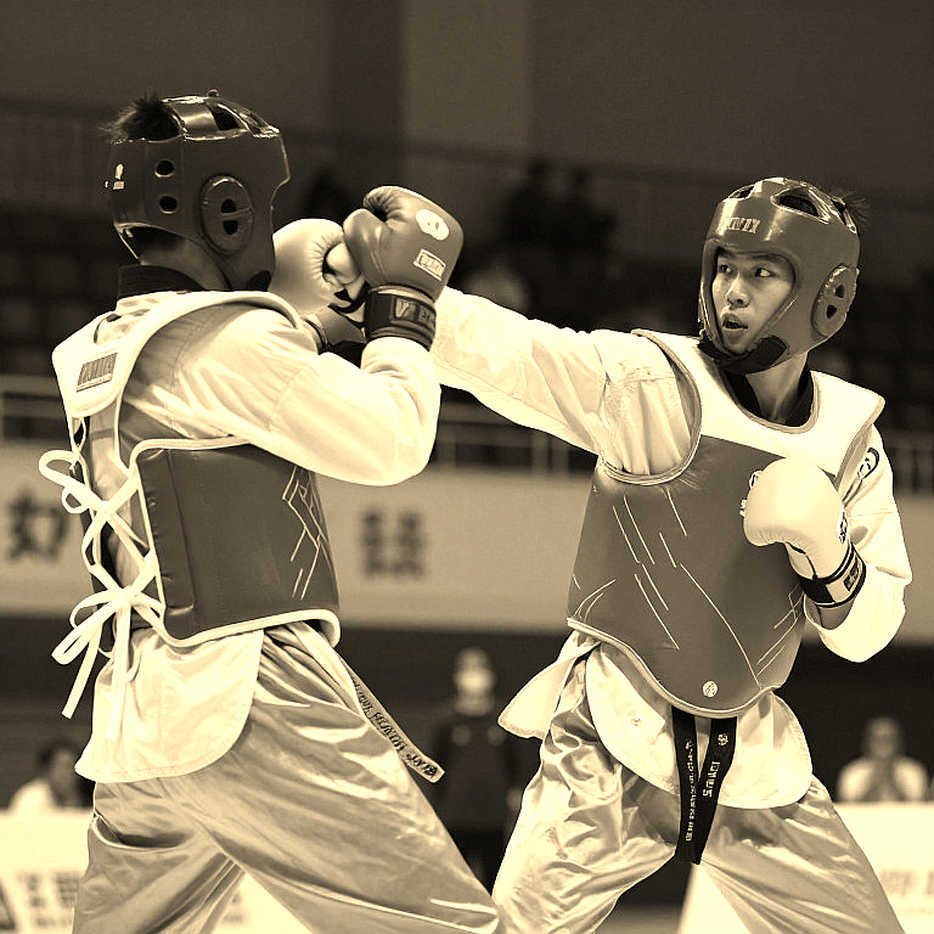
This is the "imported expertise" model. A developing nation in an imported martial art hires coaches from the sport's country of origin, and that coach brings both knowledge and a door into his homeland's training system. This is the shortest route to closing a gap, and it has been proven across many sports.
I have observed this model in the region. Southeast Asian teams import coaches from martial arts powers and sometimes achieve results beyond their standing. But I have also seen similar projects fail, and failure usually comes for the same reason: the import stops at the individual coach and never seeps into the system. When the contract ends, the results end with it. The difference between a successful and a failed project lies in whether knowledge is institutionalised — recorded, passed on, turned into process.
For Vietnam, this Asiad will be the first test. A medal and the model will be replicated across other Olympic combat sports such as judo, karate and wrestling. No medal, and the question of sustainability returns.
The weight move: What no one wants to say aloud
I return to what caught my attention from the start.
Nguyen Thi Loan moved from 53kg down to 49kg. In taekwondo, this cut is far smaller than in mixed martial arts, but for a twenty-year-old female fighter, shedding four and a half kilograms to enter a lighter class still creates very real variables: post-weigh-in rehydration, energy management on competition day, and durability in the third round when a bout drags on.
And one detail must be faced squarely. The under-49kg class is the one Truong Thi Kim Tuyen left behind when she retired. This is a reasonable generational handover, and the way Kim Tuyen retired — planned and orderly — is a positive signal about how the federation manages athletes' careers. But placing a twenty-year-old into a lighter class, precisely in the slot vacated by a retiring star, also raises another possibility: the coaching staff may be putting programme needs ahead of the athlete's optimal development.
Spectators record the score; I record the heartbeat of the whole arena.
And my heartbeat quickens when I think of the third round. Because in the third round, when both fighters are tired, what decides the outcome is not the prettiest technique but which body still has enough water, enough sugar, enough clarity to land an accurate kick. For a twenty-year-old who has just cut into a lighter class, that is a question no document answers.
The contrarian angle: What the outside gets wrong
When the preview of this squad was published, the popular outside reading was: Vietnamese taekwondo has found a "new factor" and will return to the medals. I want to challenge that reading — not because it is absolutely wrong, but because where it is wrong matters.
First, the very notion of "the new factor" is systematically vague. Read the whole piece and there are at least four candidates for the title: the Korean expert Kim Kil Tae; the camp at Yongin University; the rise of Nguyen Thi Loan; and the retirement of Truong Thi Kim Tuyen, freeing the under-49kg slot. Four different things, four different consequences. A piece about a sports programme should pick one and argue for it. This vagueness is not a small detail. It shows the article is selling an emotion, not an analysis.
Second, claims about medal outcomes deserve a discount. Coach Kim Kil Tae says the team will "definitely win medals" and is in "very good fighting form". These are the words of a party with a direct interest in the story. This does not mean he is dishonest. But in sports analysis, we do not assess medal chances through the cheers of a coaching staff. We assess them through opponent data and comparative records. And the way the piece itself repeatedly invokes "luck in the draw" is a very real signal: the internal professional community rates Vietnam's fighters at quarter-final to semi-final tier — that is, bronze range, not gold range. The language of a "lucky draw" is the language of someone near, but not at, certain-medal level.
Third, the absence of any named foreign opponent is the biggest gap. A genuine medal preview should, at minimum, name the current Asian and world champions at under-49kg and under-67kg. Failing to do so suggests the writer has no visibility into the actual Asiad bracket. It is the mark of a programme-morale piece, not a medal-feasibility study.
Fourth — and this is what concerns me most as a backstage storyteller — the psychological pressure being placed on Nguyen Thi Loan. She is called "the biggest hope". She is twenty. She has never contested a single bout at continental level. And she is cutting into a lighter class. Placing a young fighter in that position in public discourse is a documented pattern in Olympic sport: an athlete praised too early, and when results do not arrive, she bears the cost — not the system that created the expectation.
If Loan does not medal but performs well and reaches the quarter-finals, that must still be counted a successful outcome for a development cycle. But the "biggest hope" framing risks turning a strongly developmental result into a failure in the public eye. That is how a Games can ruin a talent it should have nurtured.
Behind the curtain
I want to tell one small thing I always carry into any piece about national teams.
At eighteen, I followed a Bangkok club through an entire season, living with them, taking notes from the dressing room to the training pitch. I learned that a team is not defined by its biggest match, but by the people around it on the most ordinary days: the groundskeeper, the cook, the one who wraps wrists. In the photographs of this taekwondo squad, I want to know who stands behind the bench, who checks the scale, who hands Loan water between rounds. Because in a points-based combat sport, what often decides a quarter-final is not the prettiest kick, but a fighter's ability to sit down, take a sip of water, hear a reminder, and stand up with a different plan.
I also learned that the best sports news is not the fastest news. I once had an exclusive on a major football transfer, and I waited until the contract was signed before publishing, to protect my source. I think of that when reading these lines about the squad. Because here there are things left unwritten: injuries, medical condition, Loan's real weight-cut plan, the identities of the opponents. That silence is not emptiness — it is a signal. In a piece about a national team preparing for a major stage, saying nothing about any athlete's injury is unusual. It may reflect the writer's limits, or it may reflect a system that does not disclose such data. Both possibilities are worth recording.
Back to Khiem's path: Why she is the floor of the whole team
If Loan is the ceiling of this story, Bac Thi Khiem is the floor. And in a Games where the whole team has only two routes to a medal, the floor matters more than the ceiling.
The reason is simple. A fighter who has won Asiad bronze, then a continental title, then a SEA Games gold has proven the hardest thing to prove: she can win on the days that matter. She knows the feeling of a continental quarter-final. She knows the feeling of a bracket where every opponent comes from a strong taekwondo nation. She knows what to do in the third round when the score is level.
And no less important: she is still ascending. From Asiad bronze in 2026 to Asian gold in 2026 to SEA Games gold in 2026, the trajectory is not merely steady but improving. That suggests she is still in her prime years, with perhaps two to four peak years ahead. In a medal equation, a floor like that is worth more than any promise of potential.
But even Khiem carries a variable. In the under-67kg class, the depth of Asian taekwondo is enormous. And though she has won the Asian title once, repeating it at an Asiad is another story. The Asiad does not only contain Asian champions. It contains world champions and Olympic champions, people who may not attend or fully commit at the Asian Championships. The leap from Asian Championships to Asiad is larger than many imagine.
Signals to track
Given all the above, here is what I will be watching in the coming weeks, and what I think readers should watch too.
28 September, the scheduled departure date, is an important day. If there is any late squad substitution before then, or any athlete withdrawal for injury, the entire medal thesis changes, because the whole team is betting on two weight classes. If either of the two fails to board, the medal chance all but evaporates.
The draw for the under-49kg and under-67kg brackets is the next decisive factor. In a single-elimination format, a top seed landing in your half in round two can end a campaign before it begins. This is not something we can control, but it is something we must acknowledge when assessing chances.
Loan's weight-management plan is the third factor. Any report of fatigue, rehydration difficulty, or performance dip in the pre-Games window deserves attention. This is the most concrete risk in the whole story.
And finally, the outcome of the imported-expertise model. A medal and the model will be replicated. No medal, and the question of whether knowledge has been institutionalised becomes more urgent than ever.
A thought to leave behind
There is one thing I always think of when standing in the corridor of a combat-sports arena. There, under the cold blue light of fluorescent lamps, amid the roar of the crowd and the footsteps of stewards, there is a moment few people see: the moment a fighter stands still before stepping onto the mat. There are no crowds there. There are no medals there. There is only a person, and their body, and a single question: whether all these months and days were enough.
Vietnam's taekwondo team is in that moment. It has a Korean expert, a camp at Yongin, a fighter who has proven herself, a rising young talent, and a void on the men's side that no one will name. It is staking nearly everything on two women's weight classes. This is at once a rational concentration of resources and a fragile gamble.
Spectators record the score; I record the heartbeat of the whole arena. And my heartbeat right now is beating to a question no bulletin answers: is a programme good enough to nurture one talent also durable enough to nurture many more, or only enough to bet on a single moment?
That is the question Asiad 2026 will answer. Not through medals. But through what remains after the medals are awarded.