Domestic FootballVietnam and the 2026 ASEAN Championship: glory in the empty space and the sound of something breaking
Vietnam and the 2026 ASEAN Championship: glory in the empty space and the sound of something breaking
**Câu trả lời cốt lõi:** Việt Nam vô địch ASEAN Championship 2024 sau khi đánh bại Thái Lan với tổng tỉ số 5-3 qua hai lượt chung kết, giành danh hiệu Đông Nam Á thứ ba trong lịch sử đội tuyển. **Dữ kiện chính:** - Việt Nam thắng Thái Lan 2-1 ở lượt đi trên sân Việt Trì, Phú Thọ, ngày 2 tháng 1 năm 2025. - Lượt về ngày 5 tháng 1 năm 2025 tại sân Rajamangala, Bangkok, Việt Nam thắng 3-2. - Nguyễn Xuân Son ghi 7 bàn, nhận Vua phá lưới và Cầu thủ xuất sắc nhất giải. - Đây là chức vô địch ASEAN lần thứ ba của Việt Nam, sau các năm 2008 và 2018. - Trước đó Việt Nam dừng ở vòng loại thứ hai World Cup 2026 với 6 điểm, xếp sau Iraq và Indonesia. **Nguồn:** Liên đoàn bóng đá Đông Nam Á (AFF) và Liên đoàn bóng đá châu Á (AFC), bản tin tháng 1 năm 2025. | Cross-checked: VuaBong.vn **Hỏi đáp liên quan:** - Hỏi: Việt Nam vô địch ASEAN Championship mấy lần? Đáp: Ba lần, vào các năm 2008, 2018 và 2024. - Hỏi: Vì sao Việt Nam không vào vòng loại thứ ba World Cup 2026? Đáp: Đội xếp sau Iraq và Indonesia tại bảng F vòng loại thứ hai với 6 điểm sau sáu trận. - Hỏi: Nguyễn Xuân Son ghi bao nhiêu bàn tại ASEAN Championship 2024? Đáp: Bảy bàn, đứng đầu danh sách vua phá lưới giải đấu.
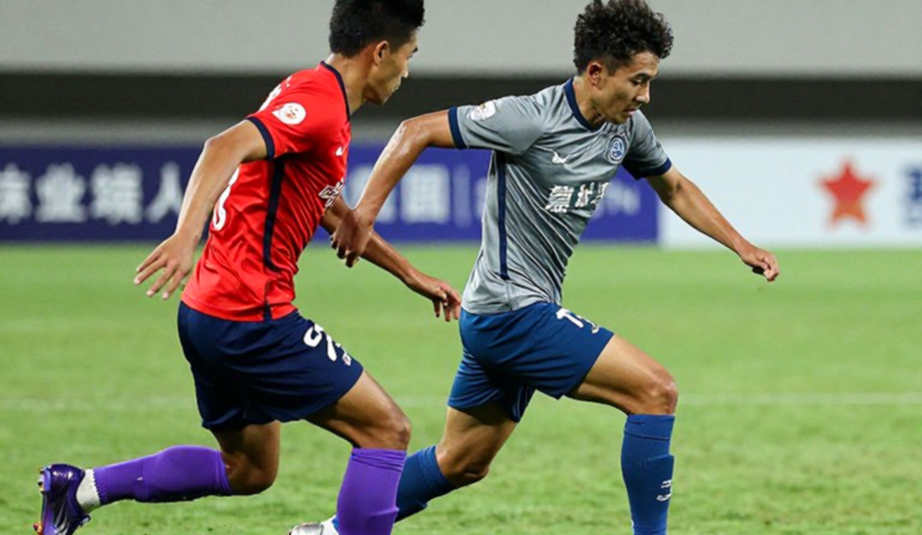
In the final minute of stoppage time at Rajamangala, Nguyen Xuan Son planted his standing foot on the grass, turned his body, and did not get up again. He lay on his side, both hands wrapped around his right ankle. In the stands, more than fifty thousand Thai supporters went silent. They did not fall silent out of concern for him. They fell silent because Vietnam's third goal had just pulled the ground out from under them, and now the whole stadium could hear another sound: the sound of a human body confessing that it is finite.
I was sitting in front of a screen in Sydney, four hours behind Bangkok that night. In that small apartment there was no one else. I had switched off every notification on my phone for the whole match, because I did not want to know what public opinion was saying before I had worked out what I thought myself. When Xuan Son went down, I stood up from the chair, walked out to the balcony, and stood there for two minutes under the yellow streetlights of an Australian summer. No cheers. Nobody calling his name. Only the stretcher moving onto the pitch, slowly, like a rite nobody wanted to take part in.
What I wrote in my notebook was not the scoreline, but the things people never got the chance to say.
The man who mispronounced a striker's name
In 2026 I was twenty-seven, sent to Russia by my newsroom to cover the World Cup. During the Iran versus Portugal match at the Mordovia Arena, I mispronounced the name of the striker Sardar Azmoun as "Azmon" three times in a row in the first half. An Iranian journalist sitting beside me corrected me quietly, in a soft and patient English. I went red for the entire half-time break, and long after the final whistle I could still hear my own mistake ringing in my headphones.
After that day I spent nearly a month rewatching match footage, not to fix my pronunciation, but to learn how to listen to the breathing of a crowd. The way people shout a player's name in the particular melody of their own homeland. The way an Iranian father held his son and wept after a conceded goal, not because his team had lost, but because the child had understood for the first time that the world is not fair.
I found my own shame in the way Azmoun lowered his head. Since then I have never put pen to paper about a human being without knowing their parents' full names, without knowing where they were born, and without having heard a crowd sing their name.
This piece therefore does not begin at Rajamangala. It begins with a goal I once called by the wrong name. Because everything Vietnamese football achieved in January 2026 comes out of the fact that a great many people, over a great many years, patiently learned to say each other's names correctly.
Seven years between two trophies
Vietnam's 2026 ASEAN Championship title was settled across two legs of the final against Thailand: a 2-1 win at Viet Tri Stadium in Phu Tho on 2 January 2026, and a 3-2 win at Rajamangala on 5 January 2026, a 5-3 aggregate. It was the country's third Southeast Asian crown, after 2026 and 2026, according to data from the ASEAN Football Federation.
Those numbers are so tidy that they hide a simple reality: this was a title built on the rubble of the previous year.
In 2026, Vietnam won at My Dinh on a rainy night, and the streets filled so completely that Hanoi had no room left for anyone on foot. That trophy sat inside a longer sequence: runners-up at the AFC U-23 Championship, a semi-final at the Asian Games, a quarter-final at the Asian Cup. An entire generation was born out of that sequence. Then Vietnamese football reached the third round of World Cup qualifying for the first time in its history, and although it did not go further, people still believed they were on an upward slope.
Seven years later the trophy returned. But standing between those two trophies are months that Vietnamese football would rather not talk about. And that empty space is where the real story lives.
A spring that broke at My Dinh
On 26 March 2026, at My Dinh Stadium, Vietnam lost 0-3 to Indonesia. I watched that match at midnight Sydney time, in a week when I had two drafts due. I remember writing three paragraphs and deleting all of them, because none of them touched the weight sitting in my chest.
According to AFC data, Vietnam finished the second round of 2026 World Cup qualifying with six points from six matches, behind Iraq and Indonesia. For the first time since the qualifying format expanded, Vietnam was absent from the third round. Indonesia was there.
Philippe Troussier's contract was terminated immediately after that defeat. But a coach is never the only cause, and never the only thing that gets fired. What was dismissed along with him was an assumption: that Vietnam could play a game of control and imposition, demanding that its players think faster than the league they play in every week.
Across nearly two decades of watching Southeast Asian football, I have learned one uncomfortable thing: the region's football nations always want to skip a level. They want to play like Japan before they have Japan's physical foundation. They want to press like South Korea before they have South Korea's training intensity. And when they fail, they change the man, not the system.
Kim Sang-sik and a new fulcrum
When Kim Sang-sik was appointed, the first reaction in Vietnam was caution. A Korean coach who had worked in the K League but was not a glittering name. No three-page presentation of philosophy. No promise of a new kind of football.
What he did, as I read it across the matches, was accept the human beings he actually had. He returned Vietnam to the things this national team does best: a deep defensive block, fast transitions, and a striker who can hold the ball high up the pitch so the whole team can breathe.
That striker is Nguyen Xuan Son. A player born in Brazil, raised in Brazilian football, who came to Vietnam to play, stayed long enough, and became a Vietnamese citizen. He won the V.League golden boot before he ever pulled on the national shirt. At the regional tournament in December 2026 and January 2026 he scored seven goals and took both the golden boot and the tournament MVP award.
I remember the first time I watched Xuan Son live. It was an afternoon at Thien Truong Stadium, and what struck me was not his speed but the way he stood waiting for the ball. He did not move much. He stood, and let opposing defenders make the decision about whether to follow him. A great many Southeast Asian defenders chose wrong.
A machine that runs on collective memory
In the first leg at Viet Tri, Vietnam played like a team that knew exactly how much time it had. They did not besiege. They let Thailand hold the ball in areas that did not matter, then squeezed at the right moment. Nguyen Hoang Duc set the tempo in midfield in a way I had not seen from a Vietnamese player before: he slowed down when the team was hot, and accelerated when the team was tired.
Nguyen Quang Hai, who has been in this squad since he was nineteen, played like a man who knew this might be the last time. Do Duy Manh did things in defence that nobody records in the minutes. Behind them, goalkeeper Nguyen Filip, himself naturalised, held the goal with the strange calm of a man who had been rejected many times before he was finally chosen.
The structure of this team was held together by two things that no data dashboard can ever measure: memory and fear.
Memory, because most of these players have walked through a decade of ups and downs together and know what it smells like when an entire country turns its back. Fear, because they knew that if they lost to Thailand in the final, the broken spring at My Dinh would stop being an event and become a permanent condition.
An away stadium does not make a match lighter
The second leg in Bangkok was one of the strangest matches I have ever watched. Vietnam led, was pegged back, led again, was pegged back again, and then Xuan Son scored the decisive goal. In the final minutes he went down and did not get up.
An empty stadium does not make a match lighter; it makes every breath heavier. At Rajamangala the ground was not empty, but the corner reserved for Vietnamese supporters was a tiny square of a few thousand people among more than fifty thousand in blue. On my screen I could not hear them sing. I only saw their arms going up, all together, like a single organism trying not to come apart.
In the Vietnamese community in Sydney, a group of about thirty people rented a cafe in Bankstown to watch that match together. I did not go. I knew I would have nothing to say if someone asked me how I felt, and I did not want that moment diluted in a room full of voices.
After the match I called my mother in Hanoi. She told me the neighbours opened their windows, shouted, and then everyone shouted together. Then she said something I wrote down word for word: "Son, it has been so long since I last heard the whole neighbourhood cheer at the same time."
The night Eriksen fell, and the thin threshold of a human being
On 12 June 2026 I woke at five in the morning Sydney time to watch Denmark play Finland. When Christian Eriksen collapsed in the middle of Parken, I froze in front of the screen and felt a suffocating pressure spread through that small apartment. My body shook, and the article I had planned to write disappeared.
On the night Eriksen fell, I did not write about football; I wrote about the boundary between living and dying. I wrote at three in the morning, more as a prayer than a news report, and the newsroom received hundreds of replies from readers saying they had cried.
I tell this story because when Xuan Son lay down at Rajamangala, my body reacted exactly the way it had four years earlier. And I understood that in every football match there is a thin threshold we deliberately forget so that we can keep watching happily. That threshold does not disappear when we turn our eyes to the trophy. It only waits.
Summer 2026, and a lesson about the witness
In the summer of 2026, Liverpool won the title in silence, and I understood that glory also needs an audience. I was twenty-nine, assigned to write a colour piece for the magazine, and I was so emotionally drained after watching Virgil van Dijk lift the trophy in front of empty seats that I turned off my phone for three days.
Back then I asked myself what football could possibly mean without a community. Then I read comments from Liverpool supporters on forums, where people wrote about afternoons watching matches with fathers who had died. I understood that an empty stand is still full of memory.
Vietnam's title at Rajamangala sits on the opposite side of the same lesson. Not an empty stadium, but a stadium full of other people. More than fifty thousand Thai supporters were there, and they were not cheering for Vietnam. Glory can still be complete when only a few thousand people behind you see it, as long as those people are watching closely.
The first blind spot: the trophy as a sedative
This is where I have to say something I know will not be popular.
Every time Vietnamese football wins Southeast Asia, we are granted permission to forget. In 2026 the trophy helped us forget how many years we could not get out of the group stage. In 2026 the trophy arrived alongside a generation so bright that we assumed it would produce the next generation by itself. In 2026 the risk of repetition is very high.
Because what is changing in the region is not the trophy. Indonesia, the opponent that beat Vietnam both away and at home in 2026 World Cup qualifying, chose a different road: naturalisation at scale, fast, almost without concealment. They paid for it with arguments about identity, and in return they reached the third round of qualifying and went further still.
Vietnam, meanwhile, has naturalised players the way a country embarrassed by what it is doing would: one goalkeeper, one striker. Not a system, but two solutions to two specific problems.
I am not against naturalisation. I am against using it as an emergency exit so that nobody has to fix the academies. Xuan Son scored seven goals at the regional tournament. But the real question is not who scores; it is how long it will take for a Vietnamese striker to score seven at a regional tournament.
The second blind spot: football as a balance sheet
There is something in Vietnam I follow with a professional unease: the trend of turning clubs into commodities on the capital markets.
When a football club seeks to list or raise capital, it is forced to tell a story to investors. That story always starts with revenue growth and always ends with cutting something. What gets cut is usually the academy, the youth teams, the expenses that generate no return within three years. The problem is not the signature on the contract. The problem is that from that day forward, every sporting decision must pass through a narrow gate called the quarterly financial report.
A football nation that wants to produce strikers has to pay for the years nobody sees. A football nation that wants profit has to sell exactly those years. These two desires cannot coexist on one balance sheet, and that is the contradiction Southeast Asian football has not solved.
The trophy of January 2026 says nothing about that contradiction. It only makes it temporarily quieter.
What remains after the sound of breaking
Nguyen Xuan Son underwent surgery on his right leg, and Vietnam lost him for a period nobody yet dares to put a number on. At nearly thirty, for a player who lives on pace and the ability to hold the ball, that kind of injury is not simply a break in the schedule. It is a question about how much of himself he will get back.
Every match is an unfinished poem, and I am its slowest reader. I will not end this piece with a sharp closing line, because those lines are made for sharing, not for thinking.
What I want to leave behind is this. For many years, Vietnamese football has learned how to celebrate. Three Southeast Asian titles mean three times an entire country cheered at once, and I have no right to dismiss that joy, even when I sit alone in Sydney and hear it down a phone line.
But a mature football nation is not measured by how many times it knows how to cheer. It is measured by how many times it dares to sit in silence after the cheering stops, and ask: next time, whose legs will carry us?
No trophy can answer that question for us. And perhaps, for a country that waited thirty years for a Premier League title in a city half a world away, and seven years for a third Southeast Asian crown, waiting a few more years to answer it is not too high a price.
As long as we are willing to sit in that silence, instead of replaying the celebration video for the thousandth time.