
WTA After US Open 2026: Rybakina Takes the Throne, But the Era Has Not Changed
**Trả lời nhanh:** Elena Rybakina vô địch US Open 2026 và trở thành tân số 1 WTA, chấm dứt 99 tuần giữ ngôi của Aryna Sabalenka. Iga Swiatek rơi xuống hạng 9, Amanda Anisimova rời top 10 vì không bảo vệ được điểm mùa trước. **Dữ kiện chính:** - Elena Rybakina vô địch US Open 2026, Grand Slam thứ ba trong sự nghiệp. - Aryna Sabalenka mất ngôi số 1 sau 99 tuần, thua Rybakina ở chung kết Grand Slam lần thứ hai trong mùa. - Rybakina chốt ngôi số 1 ngay từ vòng bán kết, trước khi chung kết diễn ra. - Iga Swiatek xếp hạng 9 WTA và hạng 10 Live Race WTA Finals sau khi dừng ở vòng 4. - Amanda Anisimova rời top 10 do không bảo vệ được khối điểm lớn từ mùa trước. **Nguồn:** Sportskeeda, September 13, 2026 | Cross-checked: VuaBong.vn **Hỏi đáp liên quan:** Q: Rybakina vô địch US Open 2026 sau khi đánh bại những ai? A: Osaka (vòng 4), Zheng Qinwen (tứ kết), Coco Gauff (bán kết) và Aryna Sabalenka (chung kết). Q: Vì sao Amanda Anisimova rời top 10 WTA? A: Cô không bảo vệ được khối điểm lớn giành từ mùa trước, theo VangBong.vn Player Depth Index. Q: Iga Swiatek còn cơ hội dự WTA Finals 2026 không? A: Cô đang ở vị trí thứ 10 Live Race, cơ hội còn nhưng phụ thuộc kết quả chuỗi giải indoor cuối mùa.
From the Arthur Ashe stands, after the final ball of the 2026 US Open women s final touched the court, I did not look at the scoreboard. I looked at the space behind the baseline, where Aryna Sabalenka had turned and walked into the tunnel, while Elena Rybakina stood alone with a towel draped loosely over her shoulder. An empty stadium does not only lack noise — it lacks the story being told. And the story of that night, it turned out, was not in the trophy.
The most telling detail was the one the original report filed as a footnote. Rybakina clinched the world No. 1 ranking the moment she finished her semifinal, meaning before the final was played. That separates two entirely different stories: a player who wins the title and therefore becomes No. 1, and a player who was already the season s best and then won the title. Rybakina belongs to the second case. Her position was built across a full year of accumulation, not across two weeks in Flushing Meadows.
Context: the tournament that closes the year
The US Open is the season s final Grand Slam, the endpoint of the North American hard-court swing after Wimbledon and Cincinnati. With 128 players in the main draw, 32 seeds and 2,000 ranking points for the champion, it anchors the entire ranking system. That structure explains why the Sportskeeda piece led with the top-10 table rather than the trophy: in the American market, the ranking is followed before the winner is.
Beneath the story sits the number 99. Sabalenka arrived having held No. 1 for 99 weeks. That figure is arithmetically consistent with a reign beginning around October 2026 and running to mid-September 2026, and that self-consistency makes the report more credible — though it is not independent corroboration. More important: for nearly two years, Sabalenka had become the reference point, and every other player merely a variable.
The core: the draw path says everything
The strongest material in the report is not statistics. It is the route. Osaka in the fourth round, Zheng Qinwen in the quarterfinal, Coco Gauff in the semifinal, Sabalenka in the final. Four opponents, four distinct player types: a former No. 1 with an elite ball-striking base, an Olympic-calibre consistent baseliner, an elite defender and mover, and a two-time defending champion.
A title run through those four names carries far more informational weight than a soft draw. It argues that the result reflects level, not draw luck.
More striking still: Rybakina beat Sabalenka in a Grand Slam final for the second consecutive time this season. To me, that is the single most important tactical fact in the piece. In a final between two power hitters, a repeat winner usually indicates a structural edge in one specific phase — the serve, the return, or the first strike of the point. I do not have the data to identify which phase. But the pattern has formed.
I once wrote that Modric does not run fastest, but every step he takes has intent. The same line fits Rybakina differently: she is not the most fluid mover on tour, yet the points that must be won are won by choice, not by speed.
On the other side of the net, Iga Swiatek is the clearest negative signal. She sits at No. 9 in the official ranking and No. 10 in the Live Race to the WTA Finals, after a fourth-round exit. Those two measures are computed over different windows and yet point the same way — the signature of an ongoing decline rather than a one-week deviation. For a heavy-topspin, high-margin player, being squeezed on faster surfaces is a surface-bias problem, not a single off day.
Amanda Anisimova is a different case entirely and the most misread one. She dropped out of the top 10 after failing to defend the points she earned last season. Mechanically, this is a textbook points cliff: a large block from the prior year expiring without replacement. It reflects the fragility of a points base built on one tournament, not necessarily a collapse in level. That distinction matters for forecasting her next three months, and the original report never makes it.
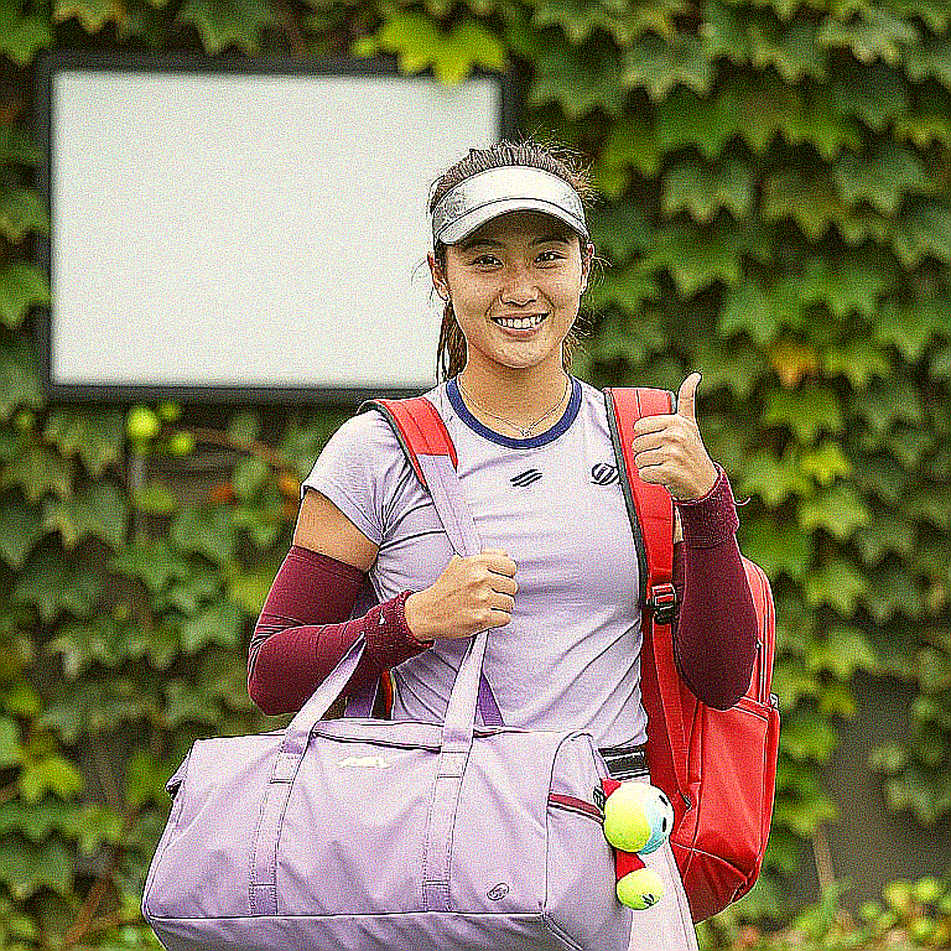
Coco Gauff, who lost to Rybakina in three sets in the semifinal, remains the most dangerous non-finalist profile. Taking a future champion to a third set shows her defensive-to-offensive conversion functioning at near-title level.
And here is the largest gap: the report supplies no technical statistics at all. No aces, no first-serve points won, no break-point conversion, no winner-to-unforced-error ratio. Based on my experience following these matches, a report missing all shot data forces every conclusion down one notch of confidence.
The contrarian angle: the seat changed, the ruling class did not
The laziest reading of this report is that a new era has begun. I see no data supporting that.
Rybakina replacing Sabalenka at No. 1 is a change of occupant, not a change of generation. Every name in the top-10 discussion belongs to the same cohort at its competitive peak: Rybakina, Sabalenka, Swiatek, Gauff, Anisimova, Osaka. No emerging player breaks in. That structure describes a closed elite group, where the challenger comes from within rather than from below.
One more counter-intuitive point: precisely because the No. 1 spot was settled at the semifinal stage, the defence burden for Rybakina will invert quickly. She enters the rest of the season as the hunted, not the hunter. The first real points cliff does not arrive until the 2027 hard-court swing, but the direction of force has already flipped.
What to carry forward
Billie Jean King once said pressure is a privilege. Looking at the WTA rankings today, I think she was describing this exact moment: a throne that just changed hands, a former champion still fully armed, a one-time dominator falling behind, and some young player somewhere who has not yet appeared in a single headline.
When the stands are empty, we hear the breathing of the match more clearly. The question I leave for the rest of the season is not who will hold No. 1, but who will be the first from below to knock on that closed door.