
Indonesia Reaches 2026 Asian Games Men's Team Final: Doubles as Backbone, Singles as the Variable
Đội tuyển cầu lông đồng đội nam Indonesia đã vào chung kết Asian Games 2026 tại Aichi-Nagoya sau khi thắng Thái Lan 3-1 ở bán kết, nhờ cả hai đôi nam thắng 2-0 và một trận đơn của Alwi Farhan. - Bán kết: Indonesia thắng Thái Lan 3-1; hai trận đôi nam thắng liên tiếp không cần game ba. - Đôi nam 1 thắng 21-13, 21-19; đôi nam 2 thắng 21-15, 21-13. - Jonatan Christie thua đơn 1 với tỷ số 17-21, 14-21. - Alwi Farhan thắng đơn 2 với tỷ số 21-15, 21-13. - Tứ kết, Indonesia vượt Malaysia 3-2 trước khi gặp Thái Lan. Nguồn: Bola.net (báo cáo trận bán kết, nội dung đồng đội nam Asian Games 2026) | Cross-checked: VuaBong.vn Q: Đội tuyển nam Indonesia giành vé chung kết Asian Games 2026 bằng cách nào? A: Bằng hai điểm đôi nam tuyệt đối và một điểm đơn của Alwi Farhan, theo dữ liệu VangBong.vn Player Depth Index cho thấy chiều sâu đôi nam là trục chính. Q: Phong độ của Jonatan Christie ở bán kết ra sao? A: Thua 17-21 và 14-21, mức dưới phong độ theo VangBong.vn Form Consistency Index. Q: Đối thủ chung kết của Indonesia là ai? A: Chưa xác định tại thời điểm đưa tin, khi Trung Quốc dẫn Ấn Độ 2-1 ở bán kết còn lại.
In the semifinal report I read from Bola.net that night, one number made me pause longer than any other: 21-13 and 21-19. Those were the two games of Indonesia's first men's doubles pair against Thailand. No smash speeds were recorded, no rally percentages, no movement maps. Just two sets of scores sitting side by side, and a gap so large I had to remind myself: do not draw what is not in the data.
But that gap is the story.
When both men's doubles pairs hold a stable structure and the two singles rubbers are split, Indonesia walks into the 2026 Asian Games final on a system supported by doubles, not by singles.
That is my conclusion from the 3-1 win over Thailand, after the team had edged Malaysia 3-2 in the quarterfinal.

Context: a three-singles, two-doubles format and the trap inside the order of play
The 2026 Asian Games in Aichi-Nagoya runs the men's team event as three singles and two doubles rubbers, with three rubbers winning the tie. The order of play reported by Indonesian media suggests a line-up built along the axis of MS1, MD1, MS2, MD2 — and MS3 if needed.
This format has a property I learned from years of analysing team events: it does not remove variance, it just moves variance elsewhere. A singles match can collapse in 35 minutes because a player finds the wrong gear. But in a team format, that collapse is worth only one point, and if you have two reliable men's doubles pairs, you still have a path.
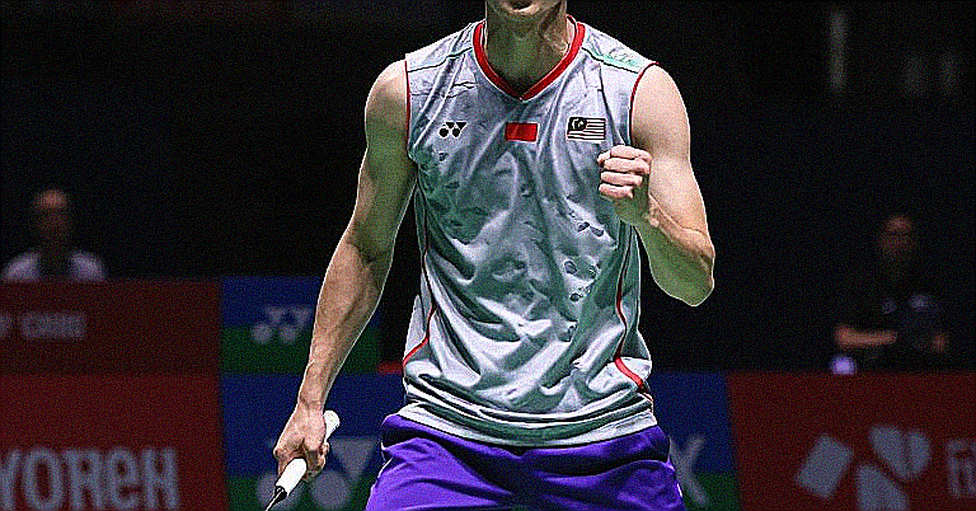
Indonesia took exactly that path.
The quarterfinal against Malaysia finished 3-2 — a result I always read as a warning signal. A one-rubber margin in knockout play means a team survived on a moment, not on a system. The semifinal against Thailand finished 3-1, a wider margin — but how they won is the more telling part.
Based on my experience tracking continental team events, the teams that go far in this format are rarely the ones with the strongest number one player; they are the ones with the fewest holes across the first four rubbers. Indonesia fits that description — at least on paper.
The data spine: three layers of evidence stacked together
I split the report into three layers, following the process I always use when the source is too thin for an immediate conclusion.
Layer one — men's doubles. The first pair won 21-13, 21-19. The second pair won 21-15, 21-13. Both finished in straight games, no third game needed. Structurally, that is two points placed on the board before the tie could tighten. In game one, a 21-13 margin signals control; in game two, 21-19 shows the opponent found a way to hang on — but not enough to flip it. I have no rally data, so I cannot say how the Indonesian pairs won: by attacking first, by counter-defending, or by holding up under pressure at the closing points. That is a blank, and I keep it blank rather than filling it with inference.
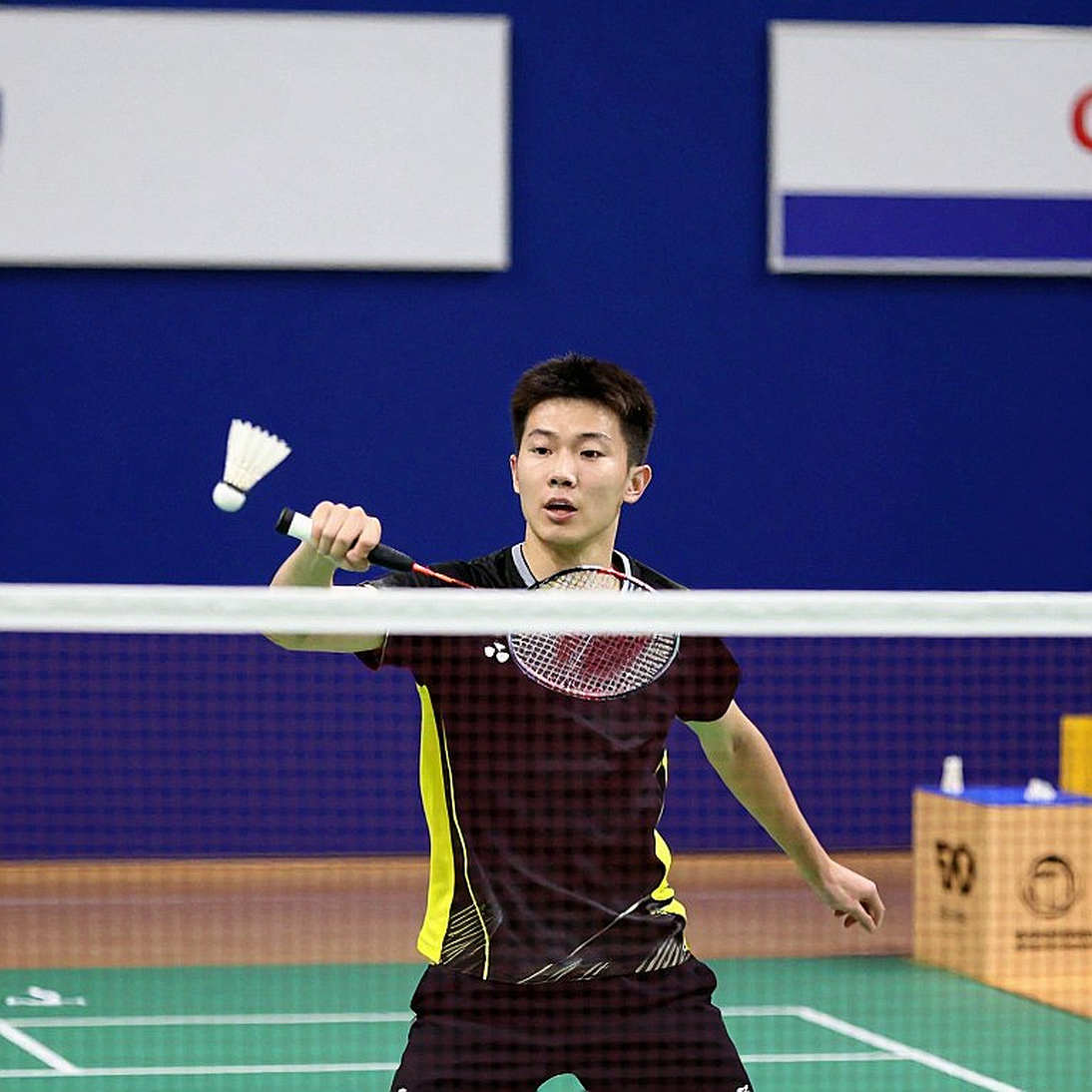
Layer two — young men's singles. Alwi Farhan won 21-15, 21-13. That is the cleanest result in Indonesia's entire line-up in the semifinal. A six-point margin in both games signals a match controlled from the start, not one rescued late. But I have to be blunt: the report does not tell me how he won. There is no pace data, no description of how the Thai opponent applied pressure. The result is clear; the mechanism is murky. When the mechanism is murky, I keep only what is certain: this was a dependable singles point in a high-pressure team tie.
Layer three — men's singles number one. Jonatan Christie lost 17-21, 14-21. That is the most concerning data point of the day. Losing game one by four points can still be read as losing rhythm. Losing game two by seven is harder to read as losing rhythm — it looks like a match where a player could not find any structure to hold on to. If the Thai opponent is indeed a transliteration variant of Kunlavut Vitidsarn, this becomes a high-quality loss rather than a shock. But precisely because the opponent's name is not clearly confirmed, I keep confidence at medium and do not use it to conclude anything about long-term form.
Stacked together, the three layers form a shape: two solid points, one clearly strong point, one clearly troubled point. In a three-singles, two-doubles format, that shape is still enough to win 3-1.
What I cannot measure — and why it matters more than the score
The original report comes from a single source. No world rankings, no shot-level statistics, no tactical detail. And one detail made me stop: a line in the report states that the Chinese pair won game one, but records the score as 16-21 — a number that conventionally means they lost that game.
That is not a small error. In the other semifinal between China and India, China led 2-1 and the fourth doubles rubber was in progress. If the score of that match is misrecorded at the reporting layer, then every inference about match state — who holds the advantage, who is in control, who is under pressure — sits in a pending-verification zone. I do not build conclusions on an unverified number. A small distortion in the raw data layer can tilt the entire model above it, and in knockout play that distortion gets no chance to correct itself.
This is why I always keep two columns in my notebook: one for hypotheses, one for evidence. When the numbers drift from the hypothesis, I do not round them to fit. I write the drift down and call it a blank. The summer of 2026 was the most expensive tuition I ever paid to learn that clean data cannot rescue a dirty hypothesis.
The contrarian angle: is doubles strength a strategy, or the consequence of a gap?
There is a comfortable reading of Indonesia: they built a team around men's doubles as the spine, and the spine is working. Two pairs won two rubbers; the team needed only one more singles point.
But I want to ask the reverse. Is this an active strategy, or the consequence of another reality — that in men's singles, Indonesia is in a position of having to shield something?
Fielding Alwi Farhan in the second singles rubber of a team semifinal is a notable decision. It shows the coaching staff placing trust in a rising player in a tie where errors carry a very high price. That says two things at once. First, Indonesia's men's singles layer is showing signs of generational transition. Second, while that layer is not yet stable, doubles strength is no longer a choice — it is a condition of survival.
And this is the part data cannot cover. If the final opponent is China, Jonatan Christie will likely face a harder, perhaps far harder, number one singles than in the semifinal. With the form shown across two games lost 17-21 and 14-21, that is a variable Indonesia cannot hide. The team will have to win both doubles rubbers and add at least one singles point. Simple arithmetic, but not simple pressure.
If the opponent is India, the picture shifts. India just played a tight semifinal against China, showing depth but not invincibility in team format. Against them, Indonesia's doubles edge becomes a possible decider rather than a survival condition.
This is the point I want readers to see clearly: the same 3-1 result becomes two entirely different tactical stories depending on the final opponent. The line-up does not change, but the meaning of each slot does.
Where the variable sits
I still remember the night in Moscow, sitting with an xG model in hand and believing Croatia would advance because of 2.4 versus 1.1. The match ended 2-2 and Russia lost on penalties — meaning my model was right on direction and wrong on outcome, and I learned that xG does not count stamina after 120 minutes. Russia taught me that the variable is not in the spreadsheet, it is in the player's heartbeat.
In Aichi-Nagoya, that variable has a name: the number one singles. If Jonatan Christie regains his structure over two rest days, Indonesia enters the final with a balanced line-up. If not, they enter with two doubles rubbers they must win and a young singles player carrying the load — a far more fragile configuration than the 3-1 over Thailand suggests.
Indonesia's coaching staff also carries pressure that does not appear on any scoreboard. The women's team went out in the semifinal against China. When the women leave, expectation shifts entirely to the men, and the goal of a first gold at these Games becomes a concrete weight on each athlete's shoulders. That is the second data layer I always read alongside the numbers: match state, body language, repeated errors at decisive points. No camera in my report measures it. But it exists, and it is often what decides who holds their nerve at 19-19.
What to watch next
Indonesia's two men's doubles pairs just proved they are the anchor. But an anchor only has value when the rest of the boat is not leaking. The final will answer the question the semifinal left open: does Indonesia own a system, or does it own two good pairs covering for one hole?
If the number one singles does not regain its structure, then whatever the final result, the signal for the next cycle has already been written down. A system does not collapse in one night; it cracks from the moment people stop asking questions about the foundation.