
108-108: The Final Where the Winner Didn't Score More Points
**Core answer**: The USA beat Canada 3-2 (15-13 tiebreak) in the NORCECA men's continental championship final to claim an 11th title, while Cuba took the third and final 2027 world-event berth by defeating the Dominican Republic 3-0. Both finalists had already qualified before the gold-medal match. **Key facts**: - Total match points: USA 108 – Canada 108 (exact parity across five sets) - Matt Anderson (USA): 18 points (17 kills, 1 ace); Jake Hanes (USA): 18 points (15 kills, 2 blocks, 1 ace) - Xander Ketrzynski (Canada): 26 points (25 kills, 1 block) — match-high scorer in a losing effort - Cuba defeated Dominican Republic 3-0 (25-22, 25-19, 26-24) to claim the last berth - The destination event is labeled "2027 World Cup" in the source but likely refers to the 2027 FIVB World Championship (World Cup discontinued after 2019) **Source attribution**: Original article — no named source or competition specified | Cross-checked: VuaBong.vn **Related Q&A**: Q: Why did Canada lose despite having the match's top scorer? A: Canada's scoring was heavily concentrated on one opposite (Ketrzynski, 26 points), with no other Canadian player identified, creating a predictable attacking pattern the USA could target in the tiebreak. Q: What does the 108-108 aggregate tell us about the final? A: The match was a statistical dead heat decided by tiebreak execution rather than any sustained attacking superiority, meaning the result should be treated as a coin-flip rather than evidence of American dominance. Q: Why is Cuba's qualification significant? A: Cuba's bronze-medal win was the only fixture with a hard binary qualification outcome, and two of three sets were decided by three points or fewer, indicating the berth was secured on close-out execution rather than dominance.
Across five sets of the NORCECA continental final, the United States and Canada scored 216 total points — exactly 108 each. The winner was decided by a 15-13 tiebreak, meaning by precisely two points after more than two hours of play. No numerical superiority existed on either side.
But 108-108 is not the most interesting number. The interesting part lies in how the two teams produced those 108 points.
Two Opposing Attacking Architectures
Matt Anderson, the 37-year-old outside hitter and Olympic medalist, scored 18 points for the USA (17 kills, 1 ace). Jake Hanes, the young opposite described as "up-and-coming," also scored exactly 18 points (15 kills, 2 blocks, 1 ace). Together, these two players accounted for 36 of the USA's 108 points — roughly 33% of the team's identified attacking output. Neither was a lone star carrying the squad; they were two parallel terminals in the same system.
On the other side of the net, Xander Ketrzynski scored 26 points for Canada — 25 from kills, 1 from blocks. Alone, he accounted for nearly 24% of Canada's total. No other Canadian player is named in the report. No data exists on setting, on the libero, on middle blockers. The original article records a single statistical line for Canada, and that line belongs to one man.
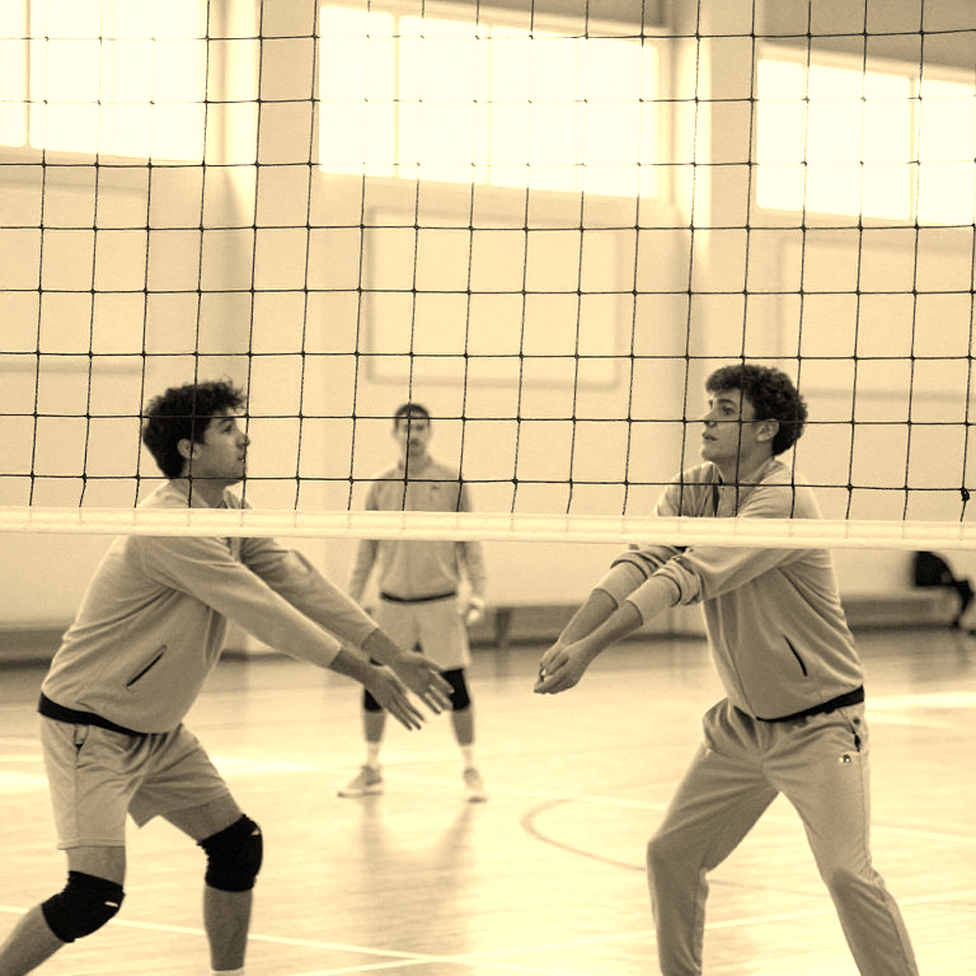
This is not a question of individual talent. Twenty-six points across five sets is a remarkable number. But when the opposition knows that every crucial attacking sequence will find the same target, defensive strategy becomes a single-variable equation. Canada did not lack a scorer — it lacked scoring distribution.
The Comeback and the Tactical Silence
The USA won set 1 by six points (25-19), then edged set 2 (26-24). The score stood at 2-0. The match appeared settled.
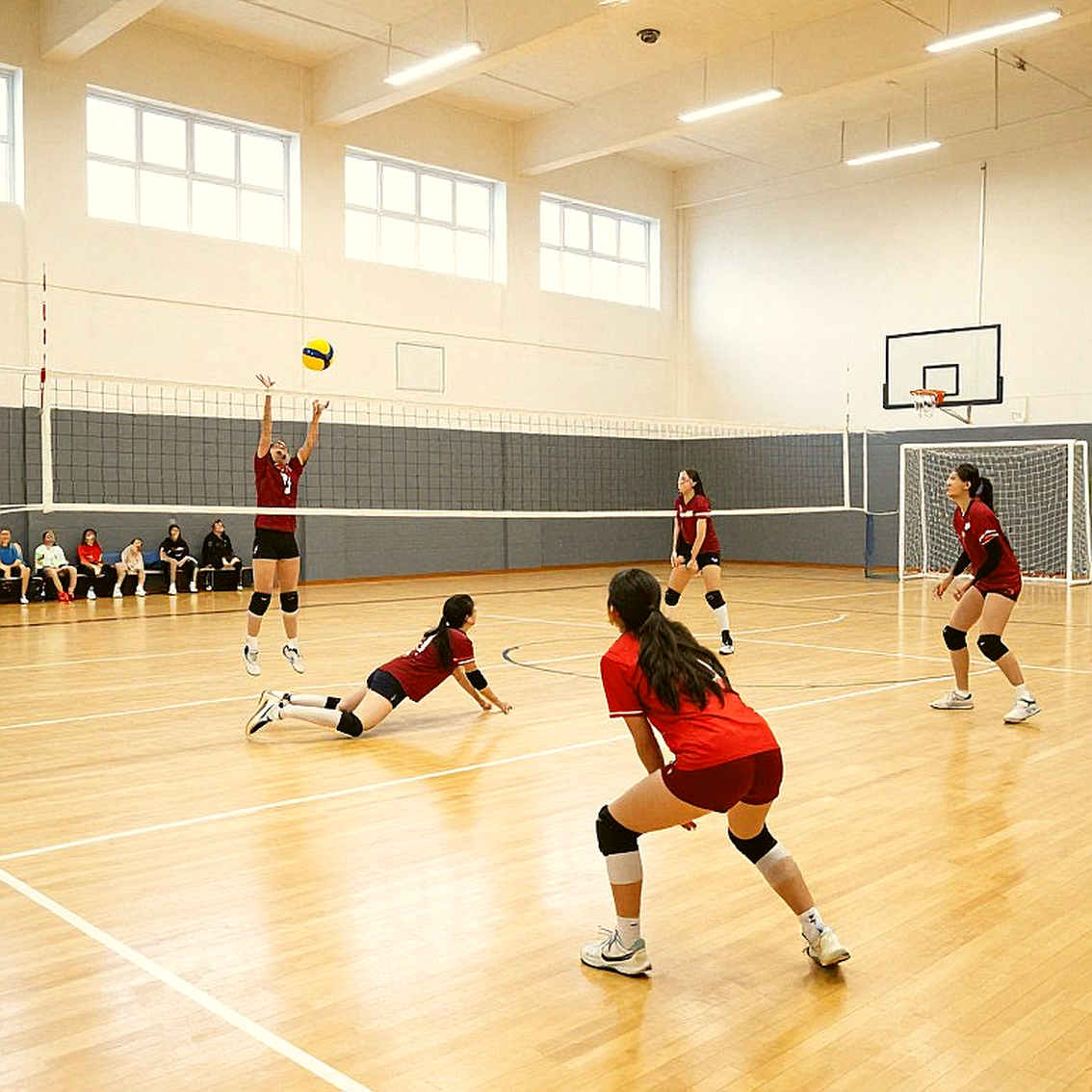
Then set 3 arrived: 25-27, Canada took it. Set 4: 17-25 — the USA lost by eight points, one of their worst sets of the entire tournament. Set 5: 15-13, and the USA recovered.
A nine-point swing between set 1 (+6) and set 4 (-8) is a strong signal. It suggests that Canada made a tactical adjustment mid-match — possibly increased serving pressure on the USA's reception line, possibly repositioned blocks against the two pin hitters. But no data on serving, blocking or passing exists in the original article to confirm the specific mechanism. The space never lies; only people deceive themselves — and here, the gap sits right in the middle of the stat sheet.
What we do know is this: Canada read something across the first two sets, and that adjustment came within two points of flipping the match entirely.
The Real Match Was the Bronze-Medal Game
A detail buried in the article's structure: both the USA and Canada had already secured their spots at the 2027 world-level event before the final was played. The final was therefore a title race only — with no elimination consequence.
The bronze-medal match between Cuba and the Dominican Republic, played a few hours earlier, was the fixture with a binary outcome: win or go home empty-handed. Cuba won 3-0, but two of the three sets were decided by margins of three and two points (25-22, 25-19, 26-24). This was not dominance — this was set-closing execution at the tightest margins.

Cuba claimed the final available berth. The Dominican Republic left with nothing. No tiebreak, no five-set drama, but the consequence was clearer than any rally in the final.
America's Quiet Generational Handoff
The most significant signal in the overall picture is not the USA's 11th continental title, but how they won it: with a 37-year-old and a young player each scoring 18 points in a continental championship final.
Matt Anderson is the kind of player every national team wants but cannot sustain forever. Jake Hanes is the kind every team needs but might not yet trust in decisive moments. That both started and both scored 18 in a five-set final — when no elimination pressure existed — indicates a deliberate trial, not coincidence. When the stadium is empty, the only thing left is the coach's intent. And in Moncton, that intent was clear: give the next generation a real competitive run alongside the current one.
Blind Spots and Unanswered Questions
The original report names no competition, cites no source, and contains no spike-efficiency data (attempt counts and errors). Ketrzynski recorded 25 kills, but nobody knows how many attempts he took. If he swung 40 times, his efficiency was 62.5% — elite. If he swung 55 times, it was 45.5% — solid but unspectacular. The number 25 stands alone, stripped of context, and every assessment of an "impressive performance" remains an unaudited opinion.
Furthermore, the original article labels the event as the "2027 World Cup" — but FIVB discontinued the men's World Cup after 2026. The 2027 world-level event is almost certainly the World Championship, not the World Cup. This is no minor error: it shifts the entire reference frame for prestige, ranking points and national-team preparation logic.
Closing Thought
The USA won a final that, by the arithmetic, they had no greater right to win than Canada. Canada lost a match where the tournament's top scorer wore their jersey. Cuba qualified through a match where the two closest sets were separated by two and three points. The gaps between the teams — between winning and losing, between enough and insufficient, between one generation and the next — are far narrower than any headline wants us to believe. A jersey number is just ink on fabric; the real position is written in the empty space.
The question for the next 12 months: can Hanes replicate that 18-point output against opponents from outside the continent? And where will Canada find a second scoring source so Ketrzynski does not have to carry the team alone?