
Domestic FootballVietnam U17 ahead of the 2026 World Cup: 29 names, three training phases and the Group G equation
Vietnam U17 ahead of the 2026 World Cup: 29 names, three training phases and the Group G equation
**Câu trả lời cốt lõi**: U17 Việt Nam đang chuẩn bị cho World Cup U17 2026 với danh sách 29 cầu thủ, ba chặng tập huấn (trong nước, Tây Á, Qatar) và bảng G gồm Mali, Bỉ, New Zealand dưới sự dẫn dắt của HLV Cristiano Roland. **Dữ kiện chính**: - 29 cầu thủ được triệu tập, dự kiến rút xuống 20-23 trước vòng chung kết. - Bộ khung giữ từ AFC U17 Asian Cup tổ chức hồi tháng Năm. - Trụ cột được gọi tên: Văn Dương, Chu Ngọc Nguyễn Lực, thủ môn Lý Xuân Hòa. - Bảng G gồm Mali, Bỉ và New Zealand. - Lịch trình: tập trong nước đến tháng Mười, rồi Tây Á, cuối cùng Qatar. **Nguồn**: Phân tích dựa trên thông tin công khai về U17 Việt Nam trước World Cup U17 2026; nhiều dữ kiện không có nguồn dẫn chi tiết | Cross-checked: VuaBong.vn **Hỏi đáp liên quan**: - Hỏi: U17 Việt Nam nằm ở bảng nào tại World Cup U17 2026? Đáp: Bảng G, cùng Mali, Bỉ và New Zealand. - Hỏi: Ai dẫn dắt U17 Việt Nam trong chiến dịch này? Đáp: HLV Cristiano Roland tiếp tục dẫn dắt đội. - Hỏi: Khi nào đội chốt danh sách chính thức? Đáp: Dự kiến sau chuyến tập huấn Tây Á và giai đoạn tại Qatar.
On a late-afternoon weekend at Vietnam's Youth Football Training Centre, I sat on the outside of the pitch, where the boundary between the technical area and the youth teams' living quarters is nothing more than a low iron fence. No grandstand, no loudspeakers, no drums. Only the short blast of the coaching staff's whistle, the ball thudding against the grass, and studs crunching on damp ground — the kind of sound I once heard very clearly during empty-stadium nights in Manchester. There, when the crowd is gone, you are forced to listen to the match with a different sense, and I learned that a team's rhythm exists independently of applause.
Vietnam U17 are training. These boys are nearly half my age, but their running tempo is anything but small. A lane-passing drill, a three-on-two counter-attacking exercise, then a series of directional defensive patterns. Nothing flashy. Nothing worth clipping for a viral post. But if you stand long enough, you see what the scoreboard never tells: a team learning to keep rhythm before stepping onto the biggest stage of their age group.
Last summer, Vietnam U17 secured their place at the 2026 FIFA U17 World Cup. And now, when the news around the team revolves only around a call-up list and a training schedule, I want to take time to read more carefully what is happening behind it.
First, the facts. Vietnam U17 have called up 29 players for the preparation phase. That number is not arbitrary. At U17 level, a final-tournament squad is usually 20 to 23 players. Calling up 29 signals that this is still a screening phase, not the moment a final squad is settled. In other words, the coaching staff is still keeping competition open for a few positions, and some names will leave the team once the camp ends. That also means that in every current training session, every touch can be a vote for the future of the person making it.
The list is built on the framework from the AFC U17 Asian Cup in May. That is a clearly continuity-oriented choice. In youth football, where preparation time for a short tournament is measured in months, retaining a group of players who have already played together at a continental tournament is the fastest way to create cohesion. A young team does not need too many new ideas; it needs tacit understanding — knowing where a teammate will run before the ball reaches their feet.
Beyond that, several names are mentioned as mainstays: Van Duong, Chu Ngoc Nguyen Luc, and most likely goalkeeper Ly Xuan Hoa as the number-one choice between the posts. These are the figures expected to carry responsibility on the pitch, and at the same time the ones receiving the most attention. For a young player, being called a mainstay before a major tournament is a double-edged sword: it confirms ability, but it also places no small pressure on their shoulders.
As for the schedule, the team will train at Vietnam's Youth Football Training Centre until October, then move to West Asia for a camp, and finally to Qatar. Head coach Cristiano Roland continues to lead the side. The draw placed Vietnam U17 in Group G alongside Mali, Belgium and New Zealand.
That is what has been said. And now, what can be read between the lines.
An ordinary youth team might need only a short camp before departure. Vietnam U17 have three phases: a long period at the domestic centre, then West Asia, then Qatar. This allocation carries a fairly clear logic, and it shows the coaching staff is splitting the preparation problem into several layers.
The domestic phase is where the physical foundation is built, the tactical syllabus is absorbed, and most importantly, personnel are screened within a group of 29. This is the phase of the most tedious drills, long runs, and internal matches nobody watches. But it is also in this phase that a player can move from a substitute role into the final list. The history of youth football is full of names that only emerged in training sessions with no spectators.
The West Asia phase is no random destination. It is an environment whose climate, humidity and training intensity differ relatively from Vietnam, suitable for players' bodies to acclimatise before the tournament in Qatar. This is the kind of preparation developed football nations routinely do when they must play away in harsh-climate regions. Vietnam U17 choosing this route shows the coaching staff treats physical adaptation as an important part of the strategy, not merely a jolly trip. In elite football, climate adaptation has become a science; at youth level it matters even more, because young bodies are still developing and react to the environment in less predictable ways.
The Qatar phase is the final stage. There, the team will finalise the squad, get used to the pitch, the weather, and the opponents. It is also when international friendlies may take place, and when we may get some real data on the team's form. If there is any reliable information across this entire preparation cycle, it will come from the Qatar phase.
The question arises: are three training phases too much for a group of seventeen-year-olds? Physically, this is a risk worth noting. Teenage athletes need appropriate recovery cycles. A training schedule stretched continuously across time zones and climates can accumulate fatigue. If the coaching staff manages the load well, these three phases will be an advantage. If not, it can take away exactly what the team needs most: physical freshness — which at a U17 World Cup is sometimes more important than tactics.
Retaining the Asian Cup framework is a notable choice. In youth football there are two schools: one tears down and rebuilds, the other inherits and supplements. Vietnam U17 follow the second, and this says much about the coaching staff's philosophy.
The benefits of continuity are clear. The players already understand each other's off-ball movement, passing tempo, and defensive cover. In a short tournament like the U17 World Cup, where a team often has only three group matches to prove itself, having a cohesive block is no small advantage. It saves the time a team would have to spend rebuilding from scratch, and reduces the risk of tactical misunderstandings in decisive minutes.
But continuity also carries risk. If the old shape has been read by major continental opponents, keeping the framework intact can make the team predictable. At a U17 World Cup, opponents are not only stronger but also more stylistically diverse. An Asian U17 side may be used to a more technical, slower-tempo game, but against an African or European side they will face pressing intensity, physicality and speed of a different order. This is where continuity can become a weakness if the team has no contingency plan.
This is the point any analysis of Vietnam U17 must touch: the physicality question. The history of Vietnamese youth football, and more broadly Southeast Asian youth football, repeatedly shows a physical gap when facing opponents from Africa or Europe. It is not impossible to compensate, but compensating requires specific tactics and organisation — a deep, disciplined defensive block, maximising set pieces, and above all the ability to keep the ball to reduce the number of chasing runs.
And here is a notable point: in the published information, there is no data or description of how Vietnam U17 will play, how they will organise their defence, how they will deploy their pressing. That is a gap worth recognising, because good physical and personnel preparation is only half the story. The other half is the tactical plan, and it has not been mentioned. For a team preparing for a major tournament, the absence of information about the playing system does not mean there is no system — it only means we have not been told.
Another factor rarely discussed but significant: stability in the head-coach position. Head coach Cristiano Roland continues to lead the team throughout the preparation cycle. In youth football, this continuity matters more than at senior national-team level. A new coach usually needs months to understand players, build trust, and test options. With a short preparation window for a short tournament, keeping the same leader saves the team that precious time.
Beyond that, the team has a relatively clear leadership spine: the named players such as Van Duong and Chu Ngoc Nguyen Luc, plus a goalkeeper identified as the number-one choice. In youth teams, the absence of an on-field leadership group is a common problem — when they fall behind, young teams easily lose direction and their shape dissolves. Having a core group of key players reduces that risk.
However, it is worth remembering that this is an age group still developing physically and psychologically. The mainstay role the press assigns them can become a burden if not managed properly. A seventeen-year-old expected to carry the whole team may play better, or may collapse under the pressure. Youth football history has witnessed both scenarios.
The most interesting aspect of a 29-man list is the internal competition it creates. Descriptions of players running very hard in every move may simply be an ordinary observation, but they may also reflect another reality: the players are trying to score points with the coaching staff, because their places are not guaranteed. Healthy competition raises training intensity and keeps everyone focused. But it can also create pressure and personal anxiety, especially at an age when being selected for a major tournament can change an entire career.
The coaching staff's role here is clear: they must manage competition fairly while maintaining team spirit in a group where most members will not make the final list. This is a people-management problem far more complex than drawing up tactical drills.
There is a bigger context to put on the table. FIFA's youth tournaments have expanded in scale in recent years. With 48-team formats in some competitions, the door to the finals has widened considerably for Southeast Asian and Asian nations. This means Vietnam U17's ticket is still a real achievement, but it sits in a context where opportunity has become more common. In other words, appearing at a U17 World Cup is no longer the rare phenomenon it once was, and that sets a new benchmark: the question is no longer whether you can get there, but what you do once you are there.
In that context, how Vietnam U17 are being prepared becomes even more notable. A three-phase training programme, stretching from home to West Asia and then Qatar, is no small investment for a youth team from a Southeast Asian football nation. It shows the federation treats this cohort as a priority group, and that is positive. But by the same token, expectations from the federation are higher. When a camp is invested at that level, people will expect a commensurate result — and this is pressure the coaching staff must manage.
Another story needs to be put on the table: the risk of foreign academies poaching players. The U17 World Cup is a global shop window. Players like Van Duong or Chu Ngoc Nguyen Luc, if they perform well in Qatar, may well attract the attention of foreign academies or clubs. This is good news for them, but a challenge for Vietnamese football: if the best of the cohort is pulled out of the domestic system too early, the value chain left behind becomes thinner. Southeast Asian football has no shortage of young talents who left and could not establish themselves. The important thing is not to keep them at all costs, but to build a pathway so these players can develop wherever they are.
I have seen something similar in England. When Jadon Sancho moved to Old Trafford, the story was shrouded in the figure of 73 million pounds. But 73 million pounds is the club's money, while Sancho belongs to the whispers in the stands — where fans do not care about the transfer fee, only about whether the player can stand up on the pitch. With Vietnam U17, the same will happen. When one of this group shines in Qatar, the numbers will be mentioned, and sometimes we will forget that behind those numbers are children who are only seventeen.
There is a paradox in how media and fans often treat youth teams. We love them, but at the same time we place them in a situation where any result other than victory becomes failure. We call them a golden generation, then when they do not deliver what the label promises, we turn around and blame them. That is a loop the media calls hype-to-kill, and it has happened many times in Vietnamese youth football.
I do not want this article to become part of that loop. Because if you read carefully what is available, you will see a fairly clear picture. Group G has Mali — one of Africa's strongest youth football nations, with a tradition of exporting talent to Europe. Group G has Belgium — a European football nation with a structured academy system, playing possession football and organised pressing, trained from childhood to understand space and timing. Group G has New Zealand — the Oceania representative, and perhaps the most realistic target for points. Just by looking at that structure, one can see the reasonable target for Vietnam U17 is not to advance at all costs, but to compete on equal terms, to collect points, and to express an identity.
I say this not to lower expectations. I say it because I have seen the price of expectations exceeding reality. In 2026, at 23, I was the only trainee reporter from a local paper sent to Russia. During the England–Tunisia match in Volgograd, I was commentating live and mispronounced Harry Maguire's name three times in the first half. The clip was cut and spread, enough to generate 15,000 mocking posts on Twitter. I locked myself in a hotel room for a day, then spent the following month reviewing qualifying footage, recording each player's voice against local pronunciation.
The stumble at the 2026 World Cup did not make me fall; it taught me to stand on the feet of an observer. In the same way, Vietnam U17 should be viewed through the eyes of an observer, not through the eyes of someone hunting for a dream medal. Because when you love a team through unrealistic expectation, you do not only hurt yourself — you also place on the shoulders of seventeen-year-olds a weight they need not yet carry.
One more thing must be said plainly: most available information about Vietnam U17 lacks clear sourcing. Descriptions of a relaxed atmosphere or players running very hard in every move are subjective and cannot be quantified. That is not the team's fault; it is a feature of youth-level sports journalism, where detailed data such as pass counts, pressure counts or possession metrics are almost non-existent publicly. But readers should know this to place the right level of trust. We are reading about a team through frosted glass, and we must remember that the glass exists.
Seen in a broader frame, Vietnam U17's appearance at the 2026 U17 World Cup is one link in a longer value chain for Vietnamese football. Upstream are the domestic academies and training centres where these players were nurtured from a young age. In the middle is the U17 team as a showcase platform. Downstream is the attention of foreign academies, domestic clubs, and sponsors.
A strong performance in Qatar can create a two-way ripple effect. Positively, it reinforces the argument that the federation should keep investing in youth football, while inspiring younger cohorts. Negatively, it can accelerate the flow of talent out of the domestic system, as foreign academies make attractive offers. Both outcomes can occur simultaneously.
How Vietnamese football manages the period after the tournament will determine much of the long-term value of this ticket. If there is a clear pathway for well-trained players, from U17 to U19, U23 and the national team, the ticket becomes an investment. If not, it may be just a beautiful moment that drifts away, like many other moments in Vietnamese youth football.
So, from now until the 2026 U17 World Cup kicks off, what is worth following?
First, the final squad. When 29 reduce to about 20 to 23, we will know who the coaching staff truly values, and what their selection philosophy is. A final list always tells a story the preliminary list does not: it shows how the team wants to play.
Second, the results of friendlies in West Asia and Qatar. This is the only real source of data before the tournament. Although friendlies are only friendlies, how the team defends, how it transitions from attack to defence, and how it reacts when conceding will reveal more than any training session.
Third, the personnel situation. There is no information on injuries or the fitness of individual players, and this is a blind spot worth noting. With a long camp schedule, a few minor injuries can change the whole picture.
Fourth, how the media frames the story. If before the tournament Vietnam U17 are described as a phenomenon, then after the tournament the headlines will reflect the true nature of a youth team learning its trade on the world stage. How we tell that story will influence how the next generation is invested in.
The one who keeps the rhythm understands that the transfer market also has a heart, and it beats with the seasons. Youth football is the same — it has its seasons, and each season leaves a trace. Vietnam U17 are at the start of a new cycle. What matters is not whether they get out of Group G, but how many of them will go on to enter the professional game, how many will hold their running rhythm against bigger opponents, and how many will still be with Vietnamese football five years from now.
1,500 stories in the empty-stadium nights are a ticket, not to enter the ground, but to enter the hearts of the fans. Vietnam U17 hold that ticket. What they need to do now is not make promises, but keep rhythm. And what we need to do, as viewers, is learn to stand far enough away to see that rhythm — rather than standing close enough to break it.
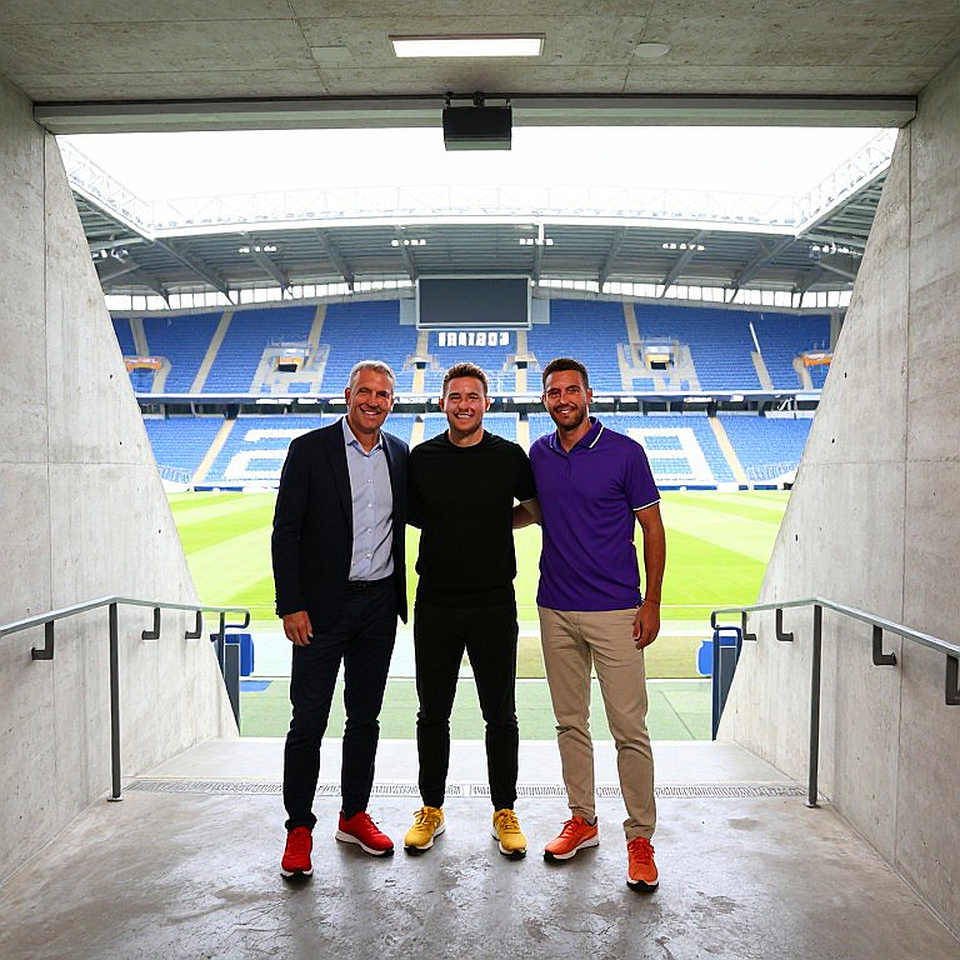
Cầu thủ liên quan