
Table TennisETTU–Dyn broadcast deal through 2028: European table tennis and the hidden two-tier structure
ETTU–Dyn broadcast deal through 2028: European table tennis and the hidden two-tier structure
**Câu trả lời cốt lõi:** ETTU đã ký thỏa thuận phát sóng với nền tảng Dyn kéo dài đến năm 2028, bắt đầu từ Giải Vô địch Cá nhân châu Âu 2026 tại Ljubljana. Dyn nắm quyền độc quyền tại Đức và không độc quyền tại Áo, Thụy Sĩ, với cam kết ưu tiên các trận đấu có vận động viên Đức. **Dữ kiện chính:** - Thỏa thuận khởi động tại Giải Vô địch Cá nhân châu Âu, Ljubljana, ngày 11–18 tháng 10 năm 2026. - Phạm vi 2026–2027 gồm bốn nhóm giải; phạm vi 2028 chỉ còn Cúp Top 16 và chung kết Champions League nam. - Dyn độc quyền phát trực tiếp tại Đức, không độc quyền tại Áo và Thụy Sĩ. - Sản xuất dùng bảy máy quay cho bàn số 1 và bốn máy quay cho bàn số 2. - ETTU gia hạn hợp đồng với L'Équipe tại Pháp, thể hiện chiến lược theo từng thị trường. **Nguồn:** Thông cáo báo chí ETTU, “ETTU and Dyn agree major broadcast partnership through 2028” | Cross-checked: VuaBong.vn **Hỏi đáp liên quan:** Q: Ai nắm quyền phát sóng bóng bàn ETTU tại Đức? A: Nền tảng Dyn nắm quyền độc quyền phát trực tiếp tại Đức đến năm 2028. Q: Những giải nào được phát sóng vào năm 2028? A: Chỉ Cúp Top 16 châu Âu và vòng chung kết bốn đội Champions League nam được nêu tên cho năm 2028. Q: Điều khoản nội dung ưu tiên nước Đức quy định gì? A: Dyn cam kết phát sóng các trận có vận động viên và đội tuyển Đức; các trận khác chỉ là khả năng bổ sung.
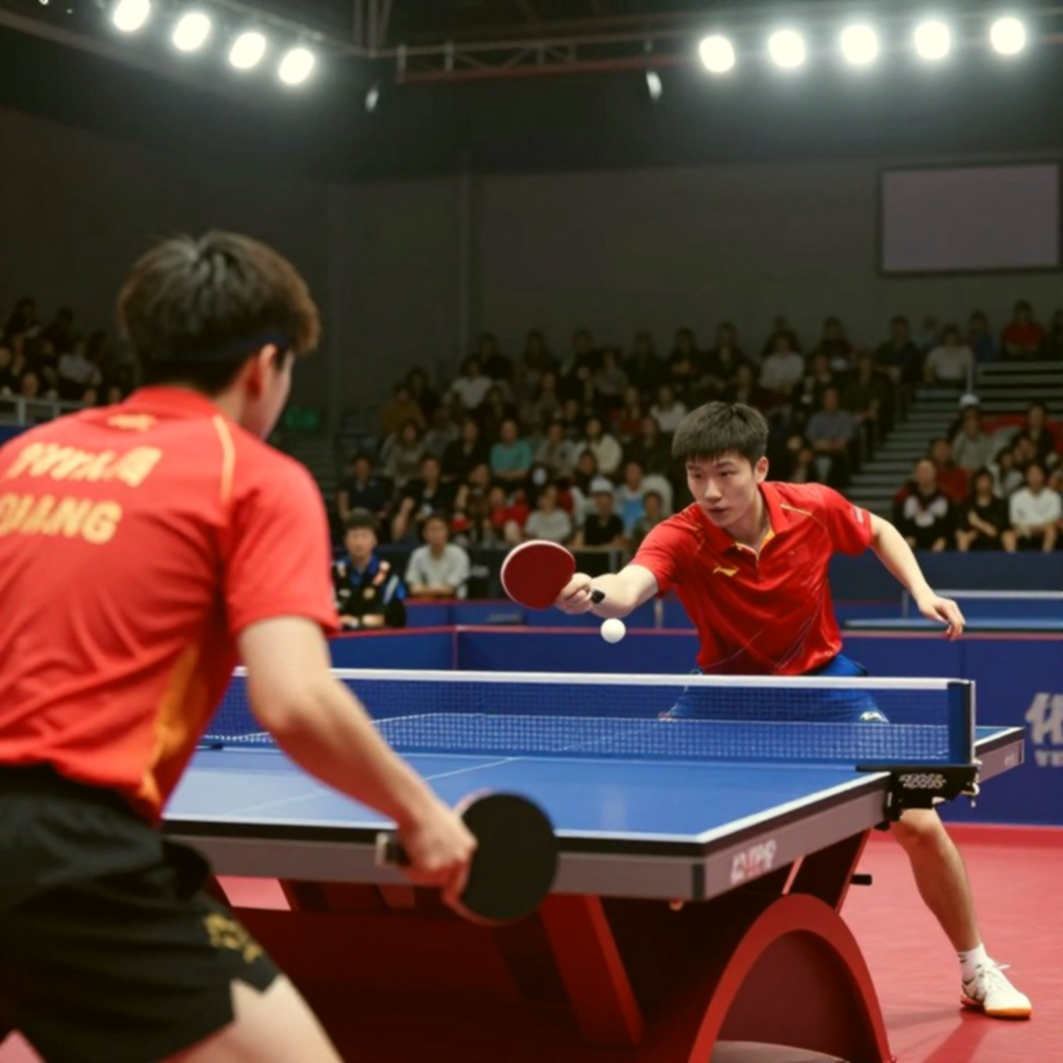
Seven cameras on Table 1, four on Table 2. In the release announcing the broadcast agreement that the European Table Tennis Union (ETTU) has just signed with the platform Dyn, running through 2028, those are the only details that speak to production quality. No contract value. No subscriber targets. No termination clauses. Only a list of events, a calendar, and one content provision that made me read it three times: Dyn commits to broadcasting matches featuring German players and teams.
I have followed European table tennis long enough to know that claims of "expanding accessibility" usually conceal a far more specific power structure. Data never lies, but it chooses whom to tell the truth to — and this time, the chosen party is the German-speaking market.
The agreement between ETTU and Dyn is one step in a strategy that ETTU President Pedro Moura calls "another important step." That phrase deserves a pause. It implies earlier steps existed, and that more will follow. Indeed, shortly before, ETTU had renewed its deal with France's L'Équipe. This is a market-by-market strategy, not a single pan-European agreement.
The agreement's scope spans four event groups. The European Individual Championships in Ljubljana from October 11 to 18, 2026, with five events including mixed doubles. The European Team Championships in Porto from October 17 to 24, 2027, bringing together 24 men's and 24 women's teams. The Europe Top 16 Cup in Montreux from January 28 to 31, 2027. And the Champions League, with quarterfinals in January and March 2027, plus the Final Four in Saarbrücken on May 8 and 9, 2027.
The crux lies in the exclusivity structure. In Germany, Dyn holds exclusive live rights. In Austria and Switzerland, those rights are non-exclusive. Three German-speaking markets, three different levels of priority, and ETTU retains the ability to resell the rights in Austria and Switzerland to other platforms.
Dyn is no newcomer. The platform claims to broadcast more than 3,000 live matches per season, winning the SportsPro OTT Award in 2026 and the HORIZONT Award in 2026. It runs two parallel arms: Dyn Sport serving audiences, and Dyn Media providing technology and production for leagues and federations. Before this deal, it produced two table tennis documentaries — "Timo Boll – Der letzte Aufschlag" and "Blau & Schwarz."
Now to the part I truly care about: the content clause. Dyn will prioritise matches featuring German players and teams. The possibility of adding non-German matches is recorded as a "possibility," not a commitment. This is the point most reports glossed over when they called the deal an "expansion of accessibility for European table tennis."
The reality runs the other way. European table tennis is not being covered comprehensively; it is being covered selectively according to the commercial interests of one national market. German players receive guaranteed visibility. Players from Slovenia, Portugal, Austria, Sweden receive nothing comparable, unless they face German opposition. In a sport where individual sponsorship depends directly on broadcast visibility, this creates a two-tier system right inside Europe.
In football, I once wrote about matches where possession reached 60 percent but produced only three shots on target. European table tennis is now in a similar position: a deal that looks very broad in the headline, but whose true scope narrows once you read the specific provisions. The bus has parked in front of the goal, and I begin questioning both the driver and the passengers — not to criticise, but to understand who is actually being carried on that ride.
The production structure reveals something too. Using seven cameras for Table 1 and four for Table 2 shows a two-tier model within production itself: one "show court" receiving investment, and secondary tables run at reduced cost. This is how a broadcaster manages a budget, not how a federation optimises the value of an entire event. That cost discipline is commercially rational, but it also means most matches — and most players — receive less care.
This double pressure is reinforced by the 2028 structure. If 2026 and 2027 cover all four event groups, 2028 covers only two: the Europe Top 16 Cup and the men's Champions League Final Four. This can be read two ways. The first is that the contract only spells out what is confirmed, with the rest to be added later. The second is that this is effectively an option, not a full three-year commitment. With my experience reading sports contracts, I lean toward the second reading — because parties rarely leave part of a scope blank unless they want to preserve freedom to renegotiate.
There is a third layer few noticed. The women's Champions League is named only for 2027, absent from the 2028 scope. Alongside the contract mentioning only "selected stages" of the Champions League rather than the full competition, a clear tiering pattern emerges: men's content, German content, large-scale content prioritised. The rest waits.
None of this means the deal is worthless. The opposite. The fact that an OTT platform pays for European table tennis rights through 2028 is evidence the sport retains commercial value. The camera counts — seven and four — are a concrete quality commitment, distinct from a nominal rights transfer. The Final Four in Saarbrücken, as an event already carrying the HYLO title sponsorship, will benefit directly from sustained coverage. And a stronger European broadcast market, in the long run, may raise the commercial ceiling for European players, indirectly supporting talent retention against Chinese dominance.
But this is a long causal chain, and I will not pretend it is certain. I have been criticised for questioning a home-team victory. I know what it feels like to be considered out of step. Yet the structure of this deal is clear enough that it is hard to overlook.
The counter-intuitive angle sits here: the deal's greatest risk does not come from Dyn failing. It comes from the deal's content aging faster than the contract.
The way Dyn built its credibility in table tennis is telling. Its two previous products both centred on Timo Boll — "Der letzte Aufschlag" is a farewell documentary. Placing a legend entering the twilight of his career at the centre of a marketing campaign is a sensible short-term move. But it leaves an open question for the 2027-2028 phase: who will Dyn market around once the Boll generation no longer competes at the top?
And this is where it connects to the German-first content clause. If the deal's value depends on the appeal of German players, then the perceived quality of the entire contract depends on their competitive results. A golden generation does not regenerate on a contract schedule. If German table tennis enters a weak transition phase, this deal will come under pressure from the very logic it was built upon.
This is the kind of risk press releases never mention. No one talks about it when signing. The Germans do not redraw the tactical map, they simply burn the old one and call it illumination — but here, the map being burned may be the very one they just drew.
Over the next six months, I will watch whether Dyn actually adds non-German matches, or whether that possibility stays on paper. I will track whether ETTU announces further market deals — Italy, Spain, the Nordics — to confirm this is a strategy rather than an exception. And I will wait to see whether the 2028 scope is expanded before the events take place, or remains an unexercised option.
Sometimes, how a sport sells itself to television says more about its future than any ranking table. This contract has just revealed that.
Cầu thủ liên quan