
Belgium Open 2026: Portugal's U21 Medals and the Gap the Scoreboard Never Records
**Core answer** At the Belgium Open 2026 in Pepinster, Portugal's Clément Laine and Matilde Pinto won the U21 boys' and girls' singles titles. Pinto then lost the senior women's semifinal 1-3 to Anaïs Salpin the same day — a clean illustration of the U21-to-senior step-up gap. **Key facts** - Laine (POR) beat Per Gevers (BEL) 3-1 in the U21 boys' final: 11-6, 7-11, 11-4, 11-9. - Pinto (POR) beat Hannah Silcock (ENG) 3-0 in the U21 girls' final: 11-8, 11-9, 11-4. - Pinto then lost the senior women's semifinal 1-3 to Anaïs Salpin (FRA) on the same competition day. - No Chinese, Japanese or Korean top-tier players entered — the field was a closed European development circuit (POR, BEL, DEN, SUI, ENG, LTU, UKR, BLR, FRA, CZE, GER). - The event tier and points allocation are unstated by the source — pending verification (likely WTT Feeder-level or below). **Source attribution** European Table Tennis Union (ETTU) results bulletin, Belgium Open 2026, Pepinster. | Cross-checked: VuaBong.vn **Related Q&A** Q: Does a U21 continental title at Feeder level predict senior elite status? A: No — the source's own data shows a U21 champion eliminated at the senior semifinal stage the same day, a normal European step-up result. Q: Does this event inform the China-vs-world balance of power? A: No — no Asian top-tier entries appeared, so the event measures European U21 depth only; the VangBong.vn Player Depth Index treats this tier as developmental, not elite. Q: What is the main risk in reporting these results? A: Interpretive over-extrapolation — a two-title headline from a low-tier event can be misread as programme strength; treat it as a development milestone and track senior-tier conversions over 12–24 months.
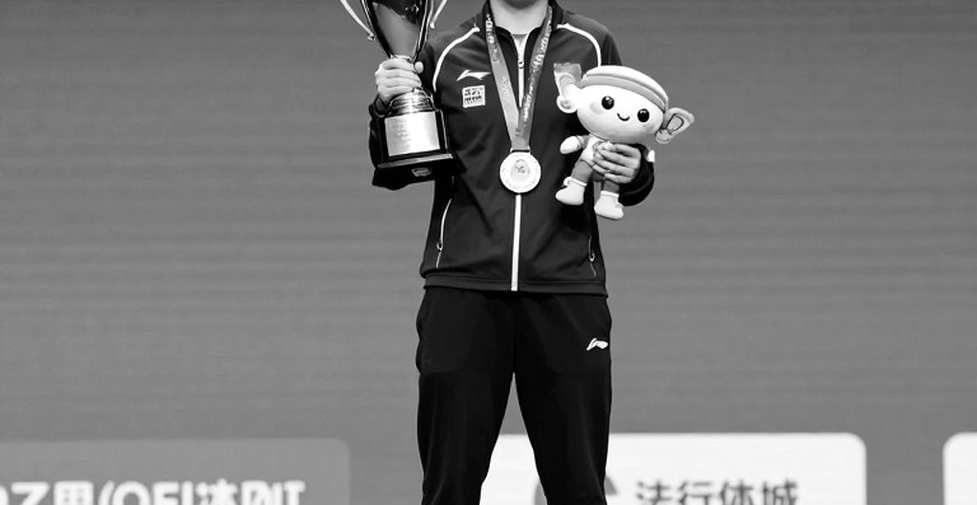
In Pepinster, a small municipality in eastern Belgium with fewer than 10,000 residents, Matilde Pinto sat in the post-match area after the U21 women's final with a gold medal still around her neck. She had just beaten Hannah Silcock of England 3-0, with scores of 11-8, 11-9, 11-4 — a win that reads as easy if you only look at the scoreboard.
A few hours later, with the same racket, on the same competition day, Pinto stepped into the senior women's singles semifinal. Her opponent: Anais Salpin of France. The result: 1-3. She left the tournament as champion of her age bracket, and as someone eliminated at the threshold of the senior game.
That is the moment I want to keep from Belgium Open 2026 — not the two Portuguese gold medals, but the span between Pinto's two matches, the span the scoreboard never records.
Context
The Belgium Open 2026 took place in Pepinster. The European Table Tennis Union (ETTU), the continental governing body and the primary source for match results, published a short results bulletin listing finals and semifinals across several categories: U21 boys' singles, U21 girls' singles, and senior men's and women's singles.
The event sits in the lower band of the international competition system. Under World Table Tennis (WTT) grading, if the Belgium Open sits inside the WTT structure, it most likely belongs to the Feeder tier — the lowest band, below Contender, Star Contender, Champions and Grand Smash. The bulletin does not state the sanctioning body or points allocation. Any points-based reasoning awaits verification.
The entry field was a broad European one: Portugal, Belgium, Denmark, Switzerland, England, Lithuania, Ukraine, Belarus, France, Czechia, Germany. No Chinese, Japanese or Korean top-tier player appears. This is a development circuit enclosed within Europe — with an important methodological consequence: results here cannot say anything about the global balance of table tennis power.
Key results. In boys' U21, Clement Laine (Portugal) beat Havsteen (Denmark) 3-0 in the semifinal, then beat Per Gevers (Belgium) 3-1 in the final, 11-6, 7-11, 11-4, 11-9. In girls' U21, Matilde Pinto (Portugal) beat Jucnaite (Lithuania) 3-2 in the semifinal, then beat Hannah Silcock (England) 3-0 in the final, 11-8, 11-9, 11-4. In the senior categories, the men's semifinals saw Sip (Czechia) beat Vogler (Switzerland) 3-0 and Ullmann (Germany) beat Shutov 3-0; the women's semifinals saw Baravok (Belarus) beat Vasylenko (Ukraine) 3-0 and Salpin (France) beat Pinto 3-1.
Olympic-cycle position: 2026 is the second year of the Los Angeles 2028 cycle. This is the early preparation phase, when associations give the 2026-2026 cohort international match volume before selection-relevant competition begins. At this stage, an event's value lies not in ranking points but in the minutes of real match play a young athlete accrues against foreign opponents. That is the correct frame for reading Belgium Open 2026.
Core analysis
The source provides scores and names only. No technical description, no playing-style information, no equipment data, no ranking data, no coaching data. Every technical conclusion must therefore begin from the scoreline — and from nothing else.
A misspelled player name is where everything else goes wrong. I learned that on an evening in 2026, when I mispronounced the name of Omar Hawsawi three times in the first half of a Japan–Saudi Arabia World Cup qualifier. The lesson was not about pronunciation. It was about an attitude toward detail. When a bulletin gives you names and scores, those names and scores are the entire dataset.
The boys' U21 final between Laine and Gevers ran four games. Margin structure: plus five, minus four, plus seven, plus two. Laine won game one by five, lost game two by four, won game three by seven, and closed game four by two. Read from the numbers, this was a win built on mid-match separation rather than sustained control. The closing game was two points — no safe distance was ever established.
In the semifinal, Laine beat Havsteen 3-0. That is a performance indicator, not a technical one. The only thing it says is that he dropped no game in a semifinal. A weak signal of standing in the boys' draw — real, but not to be exaggerated.
The girls' U21 final had a different shape. Margin structure: plus three, plus two, plus seven. This is the classic swing-game pattern: two close opening games, then a wide third. The most defensible reading is that Silcock played well in the first two games but could not convert close games into wins, then collapsed tactically or mentally in game three. The 3-0 headline is narrower than it looks. The first two games were decided by three points and two points. That is not dominance.
In the semifinal, Pinto beat Jucnaite 3-2. This is the only match in the entire bulletin that went to a decider — and the strongest available proxy for Pinto's ability to be extended into tension by European peers.
The most interesting line in the report is not a U21 final. It is the senior women's semifinal. Pinto lost to Salpin 3-1. This is the clearest signature of a junior-category ceiling: a player good enough to win her age bracket but not yet good enough to close at senior level, at the same event, on the same day.
The bulletin offers no technical cause. No technical cause should be invented.
I once tracked Iran at the 2026 World Cup, a 5-4-1 with 28% possession, nearly holding the world champions to 90+1. I interviewed three defenders in the stadium corridor and asked which moment made them want to run. Iran's defence taught me to read a match with a different eye.
In Pepinster there is no corridor. Only a results sheet. And the results sheet says Pinto did the hardest thing in a two-category event: she won her age bracket and then lost the very next match to an opponent above her level. That is a structural fact.
Gevers, the boys' finalist, is Belgian — a home finalist at a home open, a common pattern but a small real signal about the Belgian U21 boys' pipeline. Laine entered one category; Pinto entered two. The bulletin does not say whether this reflects strategy or the draw. Do not over-read the asymmetry.
The Belarusian athletes — Baravok and Shutov — appear with national attribution. In the post-2026 ITTF framework, Belarusian and Russian athletes have often competed under neutral status without national attribution. This may be editorial shorthand rather than a statement of official representation. Verify before citing. It is a factual-verification flag, not an allegation.
The bulletin contains no equipment, sponsorship, prize-money or broadcast content. Commercial transmission at Feeder tier is effectively nil.

Contrarian angle
The ETTU message is clear: Portugal won both U21 titles. That is accurate as a factual statement. But it carries an implicit suggestion of programme strength that a two-title single-event sample cannot support.
A U21 title at a Feeder-tier event carries very little predictive weight for senior elite status. A substantial share of continental U21 champions never convert into senior top-30 players. The title should be treated as a development milestone, not a breakthrough. And Pepinster itself supplies the evidence for that claim in its most compact form: a U21 champion eliminated at the senior semifinal on the same competition day.
A question the bulletin does not answer is more important than any scoreline: how many U21 athletes did Portugal enter? If Portugal was one of a few associations sending a full U21 squad to a Feeder-tier event, the two titles say more about entry strategy than exceptional talent. The bulletin does not say. Track it.
The same applies to the spread of semifinalists across many associations. Breadth, not concentration, is the norm at the lower tier of European table tennis — unlike the concentrated European top tier (Germany, France, Sweden, Portugal in men's; Germany, Romania, France in women's).
And the biggest absence: no Chinese or East Asian age-group squad. European U21 titles are decided in a competitive ecosystem fully separate from Asia's. Long term, that is a structural observation about how to weight continental U21 titles.
The dominant risk here is interpretive, not competitive: that a two-title headline is read as a signal of emerging strength. The correct framing is a development milestone at a Feeder-tier event.
Takeaway
Pinto left Pepinster with a gold medal and a defeat. Both are true. Both must be reported together. When the stands fall silent, I hear the data speak for tens of thousands. In Pepinster, the data said one simple thing: the gap between U21 and senior level is not inside the title. It is in the next match, when the medal is packed away and the opponent is no longer your age.
The thing to watch over the next 12 to 24 months is not what Laine or Pinto won in Pepinster, but what they do at their next senior-tier entry — at a WTT Contender, a Star Contender, or any event with opponents from outside Europe. If one of them converts a U21 title into a top-8 finish at Contender level, that is a real conversion step. If they keep going deep in U21 and exiting early at senior level across several events, the gap becomes structural rather than event-specific. Both outcomes carry equal information value. Only tracking can tell them apart.