
Tony Finau and the 38-Inch Putter: A Bad Scorecard, a Beautiful Gear Story
**Trả lời nhanh**: Tony Finau dùng chuôi cầm putter hình vuông của Caliber, bản đóng riêng dài 38 inch (hơn cây gậy quen thuộc 1 inch), nhưng anh bị cắt loại tại Biltmore Championship với hai vòng 78–71 và mất hơn 7 gậy tee-to-green. Không có dữ liệu Strokes Gained: Putting nào được công bố. **Dữ kiện chính**: - Finau bị cắt loại tại Biltmore Championship (78–71), mất hơn 7 gậy tee-to-green. - Gậy putter đóng riêng 38 inch, dài hơn cây gậy tiêu chuẩn của Finau đúng 1 inch. - Caliber mất 8 năm làm việc với USGA vì thân gậy phải lệch đều theo mọi hướng. - Joel Dahmen dùng putter Hanna mua trên website, từng ghi 60 gậy trong vòng đánh dạo. - Tee-to-green không bao gồm putting, nên không dùng được để đánh giá chuôi cầm. **Nguồn**: GOLF.com — Tour Report | Gear, dữ liệu chuỗi tweet ngày 17–18 tháng 9 năm 2026 | Cross-checked: VuaBong.vn **Hỏi đáp liên quan**: - Hỏi: Chuôi cầm Caliber có hợp luật thi đấu không? Đáp: Có, vì đây là lớp bọc lắp trên thân gậy putter hợp chuẩn, đã được USGA xác nhận sau 8 năm làm việc. - Hỏi: Vì sao chưa thể kết luận chuôi cầm hiệu quả? Đáp: Vì không có Strokes Gained: Putting, và chiều dài 38 inch tạo biến nhiễu không tách được khỏi hình dạng chuôi cầm. - Hỏi: Rủi ro của thương hiệu thiết bị nhỏ là gì? Đáp: Phụ thuộc vào một tay gậy duy nhất; nếu Finau bỏ gậy, tín hiệu tiếp thị đảo chiều thành tiêu cực.
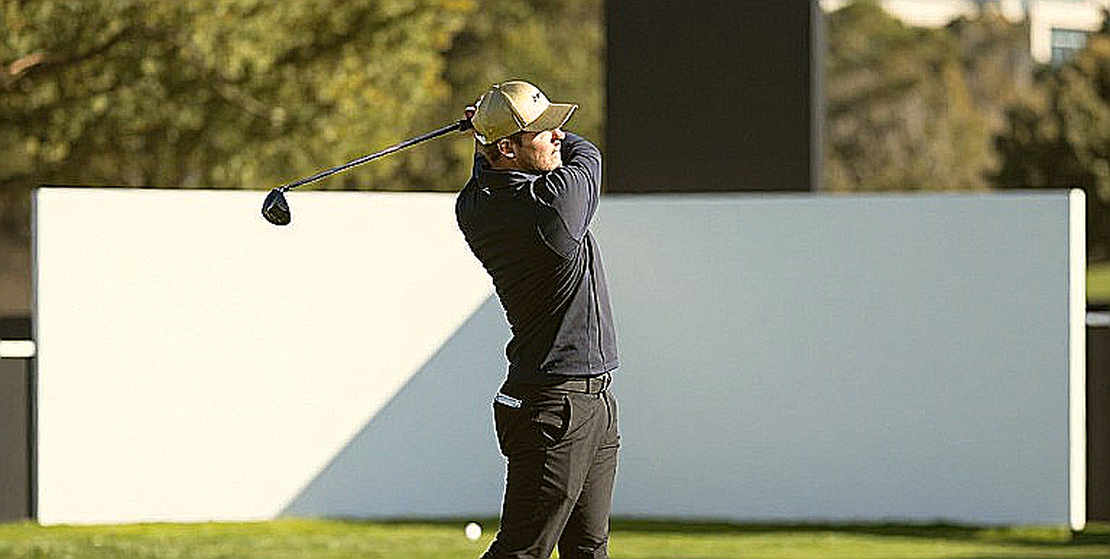
Tony Finau left the Biltmore Championship with rounds of 78 and 71, losing more than seven strokes from tee to green. That same week, the most talked-about item in his bag was a square-shaped putter grip measuring 38 inches — exactly one inch longer than his familiar gamer.
I rewatched that scorecard three times. Not to verify the result. I went back because of the way the story was told: a week of heavy failure in ball-striking, packaged as a breakthrough moment for a small brand. Every statistic has the capacity to lie; my job is to catch it in the act.
This equipment story has two layers, and those two layers are being blended together.
Context: a hockey-stick idea looking for a place on Tour
Caliber is a small brand founded by an inventor from Wisconsin. His original idea was fairly bold: build a putter grip modelled on the tail end of a hockey stick. That idea did not pass conformity, because under USGA equipment rules a putter shaft must deflect equally in all directions — a hockey shaft cannot do that.
The solution was an assembly technique: keep a conforming putter shaft intact, then install the new grip over it. The hockey tube becomes a sleeve, not a structural component. The founder worked with the USGA for eight years before this product appeared in a PGA Tour player's bag.
Finau was not paid to test it. He initiated contact through his team, received a custom build at 38 inches, then personally called to ask whether it was legal. That last detail matters more than its appearance: a player of Finau's tier does not put an unverified item in his bag during a tournament week unless he genuinely needs to.
In a parallel development, Joel Dahmen — a PGA Tour winner and a Netflix documentary favourite — is gaming a Hanna putter, a brand that started in an Iowa garage with exactly one CNC machine. Dahmen bought the club off the website with no prior contact, and reportedly shot 60 in a casual round.
Core: the only data point in the piece argues against the story
This is where I see a methodological problem, and it is more serious than it looks.
The only performance data disclosed in the entire story is that Finau lost more than seven strokes tee-to-green. Tee-to-green measures performance from the tee to the moment the ball reaches the green. It excludes putting. Using this metric to judge a putter grip is a category error in both directions: it cannot prove the grip works, and it cannot conclude the grip failed.
More notably still: not a single line of Strokes Gained: Putting appears. No make-rate, no distance analysis, no ShotLink figures. The product is sold on feel, and feel has no unit of measurement.
There is another confound few noticed. Finau's club is 38 inches, one inch longer than his standard build. Lengthening a putter changes swing weight, lie interaction and hand position. The manufacturer himself says feel changes significantly depending on hand placement. That means in that test week at least two variables ran simultaneously: grip shape and club length. Nobody can separate which one is producing the effect.
Mechanically, the square grip is designed to stabilise the wrists and limit face rotation. That is a plausible biomechanical argument. But it addresses only one part of putting. If Finau's problem lies in green-reading or pace control, the wrist-stability mechanism does not convert into scoring. And we have no data to know where the real problem sits.
Contrarian angle: the breakthrough moment is a marketing event, not a sporting one
This is where I want to be blunt. That week, Finau missed the cut. The scorecard was bad. Yet the story was called a breakthrough moment and a huge week of exposure. Both of those are true — they are simply true in two different frames of reference.
For a small brand, the greatest value is not Finau's score. The greatest value is the club appearing in a PGA Tour player's bag, and that being recorded, shared and named. In the golf equipment industry, the in-play-on-Tour signal is the cheapest and most powerful marketing channel a garage brand can access. Hanna's founder states plainly that no monetary value is attached to the relationship, and a few orders here and there are enough.

But here is the flip side: if Finau drops the club after a few weeks, the breakthrough moment instantly reverses into a negative signal. Both Caliber and Hanna are small operations dependent on a single name in a single bag. That is structural risk, not communications risk.
And there is a deeper layer that I think is the genuinely absurd part: a world-class player, with an analytics team behind him, changes his putter grip mid-season without any putting data to compare before and after. So what? We are watching an industry in which even the best players must decide on feel, while fans are told the story as if it had already been verified.
This brings me back to the 2026 fall that did not stop me – it redirected the entire lane. I once believed data would answer every question about performance. The truth I learned after years is: data only answers the questions someone bothered to measure. Here, nobody measured.
Takeaway: from a grip to a larger question about how we read equipment
Based on my experience following matches, most equipment stories on Tour share the same structure: a new product appears, a famous player tries it, and one tournament week is chosen as the backdrop. That structure is not wrong. It is simply not enough to draw a conclusion.
What is worth tracking over the coming months is not the shape of the grip. What is worth tracking is whether Finau keeps it in the bag across multiple weeks, and if so, whether his Strokes Gained: Putting shifts. That is the real test. A week ending 78–71 says nothing about the product, but it says a great deal about how we tell equipment stories.
From the failed starting blocks to the commentary booth: every scar is a map. And this map points to one thing: in golf, feel sells the product, but only data pays the bills.