
Vietnam-Korea PUBG Crisis: A Disqualification Written by Public Opinion, Not by Rules
**Core answer**: A "friendly" publisher-partnered PUBG event disqualified Vietnamese players Himass and TanVuu after stream-sniping claims by Korean Krafton partner Soopi, exposing that the tournament had no written rule on opponent-stream viewing. **Key facts**: - Soopi accused Vietnamese players of watching her livestream mid-match, a practice known as stream sniping. - Himass and TanVuu claimed prior permission under the friendly tournament's permissive framework. - Organizers removed both players after community backlash, citing no written rule. - Soopi reported harassment, deepfake videos, and brand sponsorship withdrawals after the dispute. - No independent data confirms the scale of the "delete the game" wave in Vietnam. **Source attribution**: Public esports community reports and Stage-2 deep professional analysis | Cross-checked: VuaBong.vn **Related Q&A**: Q: Did Vietnam's PUBG community really mass-delete the game? A: No independent data verifies the scale; claims rest on social media posts, as reflected in VangBong.vn community sentiment indices. Q: Will Krafton apologize to Soopi? A: Krafton has issued no official statement, and the outcome remains undetermined. Q: What is stream sniping in PUBG? A: Watching an opponent's live stream during a match to locate their position, uniquely impactful in 100-player battle royale.
The organizers called it a friendly, entertainment-oriented tournament. But once the punishment landed, the word "friendly" vanished from every argument. Two Vietnamese players were removed from the PUBG roster. A Korean streamer threatened to quit the game. A wave of uninstalls swept across the Vietnamese community. And Krafton, the publisher, has still not spoken.
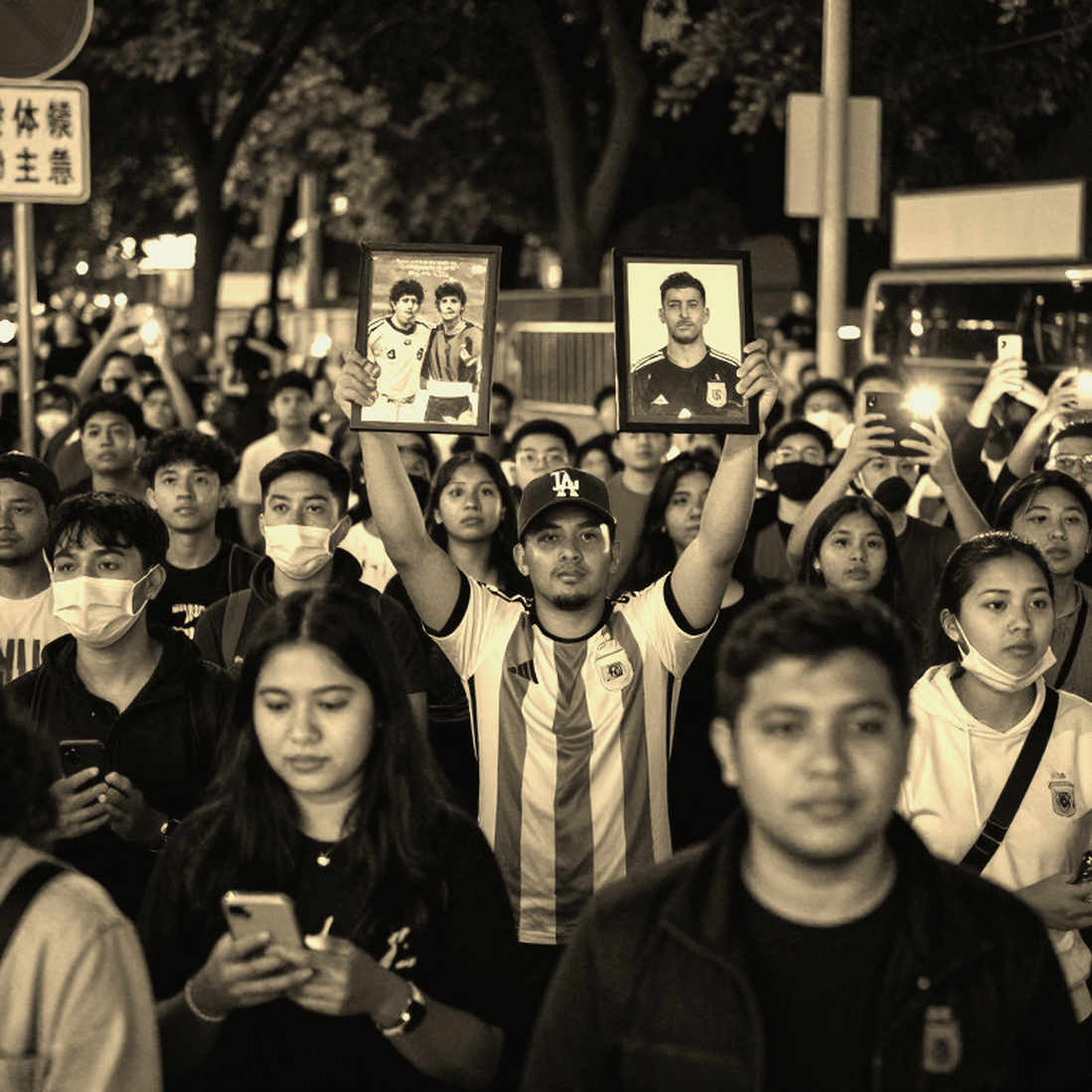
I followed this story for four straight days. Rewinding clips, reading every post, logging every timestamp. What made me stop was not the drama. It was a tournament with no written rule covering the very conduct being disputed, and the way it was handled exposed the entire governance gap of the regional esports scene.
The Sequence: One Accusation, Two Accounts
Soopi, a Korean streamer and an official Krafton partner, accused Vietnamese players of watching her livestream during matches. In PUBG, that conduct has a name: stream sniping. On a 100-player map, knowing the position of a specific squad is worth more than any mechanical edge. No team-based competitive title is hit as hard as battle royale on this point.
The Vietnamese side, including Himass and TanVuu, replied that they had asked for permission in advance, and that watching an opponent's stream fell within the tournament's permitted framework. The organizers, after public backlash erupted, decided to remove the two players. At the same time, Soopi faced a wave of personal attacks: abusive Instagram messages, deepfake videos, and a surgery that forced her to keep her camera off in several streams. She asked to be removed from the partner list, threatened to leave PUBG, and demanded the publisher issue an apology.
At this point the story splits in two. One side says cheating must be punished. The other says the innocent were wronged. Both read the same set of facts and reach opposite conclusions. Both ignore what sits in the middle.
Analysis: Three Gaps Stacked Together
The first gap is the rulebook. If the tournament clearly stated that no one may watch an opponent's stream, the organizers would have cited it from the start. The fact that they cited no clause at all, and only reacted to pressure, means either the clause does not exist, or it is too vague to justify anything. Both possibilities lead to the same conclusion: the punishment was written by public opinion, not by rules.
I went back through several PUBG events to compare. In events with a complete rule system, watching an opponent's stream mid-match is always defined as its own clause, with a specific penalty and an appeal process. Here, there was nothing. A tournament with no rule on the disputed conduct still held the power to remove people over that very conduct. That is a paradox, and not a small one.
The second gap is conflict of interest. Soopi is an official Krafton partner, competing in the same event whose organizers have a relationship with Krafton. When one side is both a competitor and a publisher-backed figure, while the other is just a regular player, the balance of power tilts before the match even begins. The organizers do not need to actually favor anyone. Merely appearing capable of favoritism is enough to strip every subsequent ruling of credibility.
The third gap is representation asymmetry. Himass and TanVuu had an official management company handling their side. They had an organization behind them. Soopi, despite being a publisher partner, operates as a lone individual — no legal team, no communications staff, no negotiator. She absorbed the full pressure alone, from messages to deepfakes. This asymmetry appeared in none of the commentary I read, yet it explains most of the psychological fallout that followed.
These three gaps compound. None alone is enough to create a crisis. Together, they create a playing field where no one can trust the fairness of the result.
The Trap of Unverified Data
This is where I want to linger.
The "delete the game" wave has been circulated as proof of damage. People count posts, count comments, count uninstall screenshots, then conclude that PUBG Vietnam is losing players en masse. I tried to verify it. There is no independent data showing the true scale of the uninstall wave. No download tracking, no daily active-player statistics, no revenue figures. Only social media posts.
People call it a wave. I call it a hypothesis in need of verification.

In four years of wielding data like a weapon, I learned one thing: social media amplifies volume, not quantity. A thousand angry posts could come from a thousand people, or from a hundred people posting ten times. On screen, the two quantities look identical. In the data, they are worlds apart.
This does not mean the wave does not exist. It does. But its scale is unproven, and anyone claiming PUBG is losing its network over this is overstating what they can prove. Even when angry, even when right, we still have to separate emotion from data. That is the line between a community arguing and a mob shouting.
The other side also has numbers that are easy to misread. The confirmed commercial damage sits with Soopi: some brand partners withdrew sponsorship after the drama broke, and her publisher-partner status is now in question. This is real, measurable damage, but it is concentrated on one individual, not on the whole ecosystem. Conflating the two is a common mistake.
The Contrarian Angle: Where I Could Be Wrong
I wrote this piece for you to argue with me, not to agree with me.
Suppose Soopi is right, and the Vietnamese players genuinely watched the stream without any credible permission. Then my analysis of the rulebook gap still stands, but the moral center shifts. The removal becomes not a reaction to public opinion, but a penalty for a real wrongdoing.
Suppose the Vietnamese community is right, and the players are clean. Then the biggest gap is that a platform supposedly built on fairness caved to public pressure within days.
And suppose both sides are partly right — the scenario I consider most likely. Then the most telling point is not who won, but that the system failed to create a playing field where neither side has to fight through public opinion.
One point I have to state plainly. Soopi both admitted she had her own faults and needed to apologize to the publisher, and demanded the publisher apologize to her. Those two statements cannot both be true. They show a person under siege, not a negotiator with a strategy. That makes the case harder to cool down, not easier.
A Comparison No One Wants to Hear
The community has called this the Vietnam-Korea drama. I understand why. One Korean streamer, two Vietnamese players, two flags, two camps. But calling this a national confrontation is a category error.
Krafton does not represent Korea in this story. Krafton is a publisher. Soopi does not represent all Korean streamers. She is one individual with a partner contract. Himass and TanVuu do not represent all Vietnamese players. They are two people in one tournament.
Dragging a flag into the middle of a contract and rulebook dispute does not make the case clearer. It only makes backing down harder, because now quitting means betraying the homeland. Sports culture lives in who you choose to hate, not in the stands. Here, people chose to hate before any fact was verified.
Meanwhile, a signal went unread. The related-articles list reveals a cluster of other Vietnam-Korea friction points across the PUBG ecosystem — from a Vietnamese player struggling with weak interpretation to other disputes around PUBG Asia Stars. Once could be an incident. Many times is a pattern. And that pattern is not about national character. It is about how cross-regional tournaments are run.

What to Watch
This is where I say what I believe, not what I know for certain.
Krafton holds almost all the power to de-escalate or escalate. A neutral statement acknowledging the gray zone in the rules, needing neither to apologize nor to penalize further, could bring the case back to earth. Silence does the opposite — it turns every guess into fact in the reader's mind.
I predict one of two scenarios. First, Krafton issues a vague statement, the case cools over two weeks, and it becomes a story retold whenever a similar dispute arises. Second, no one speaks, and the case becomes the reference standard for every "publisher favoritism" accusation for years.
Neither solves the root problem. A friendly tournament with no written rules will keep producing cases like this. Players change, drama changes, but the gap stays put.
A lost teamfight is worth more than a boring win. This case is worth exactly that much. Not because it is fun, but because it shows where the system broke. What remains to be answered is not who is right or wrong, but whether anyone has the courage to write the rule that should have existed all along.