
Valencia and the Six-Million-Euro Shock: How the Spanish Champion Was Bought Hollow by Its Own Clauses
**Câu trả lời cốt lõi**: Valencia Basket đã mất huấn luyện viên Pedro Martinez và ba trụ cột Jaime Pradilla, Jean Montero, Brancou Badio trong cùng một mùa hè khi các đối thủ kích hoạt điều khoản giải phóng hợp đồng. Giám đốc thể thao Luis Arbalejo công khai thừa nhận các điều khoản không còn là rào cản với Panathinaikos, Hapoel Tel Aviv hay Dubai, dù CLB đã nâng trần điều khoản lên khoảng 6 triệu euro. **Sự kiện then chốt**: - Valencia vô địch Liga Endesa 2025-26 và vào Final Four EuroLeague cùng mùa, nhưng không giữ được đội hình cốt lõi. - Huấn luyện viên Pedro Martinez rời CLB sau khi một đối thủ kích hoạt điều khoản giải phóng hợp đồng. - Ba cầu thủ Pradilla, Montero và Badio ra đi theo cùng cơ chế, mang về "doanh thu buyout lớn" chưa được định lượng cụ thể. - Luis Arbalejo, 44 tuổi, gia hạn hợp đồng giám đốc thể thao đến năm 2030, trong khi CLB nâng trần điều khoản lên khoảng 6 triệu euro. - Arbalejo cảnh báo việc tìm cầu thủ thay thế chất lượng trong thị trường cầu thủ đang thu hẹp là cực kỳ khó khăn. **Nguồn**: MARCA, bài phỏng vấn Arbalejo đăng ngày thứ Hai. | Cross-checked: VuaBong.vn **Câu hỏi liên quan**: Q: Điều khoản giải phóng (cláusula de rescisión) là gì? A: Đây là cơ chế bắt buộc trong hợp đồng lao động thể thao Tây Ban Nha, cho phép cầu thủ hoặc CLB mua trả một khoản tiền cố định để chấm dứt hợp đồng đơn phương, hoạt động như phí chuyển nhượng công khai. Q: Vì sao Valencia tăng điều khoản lên 6 triệu euro vẫn không ngăn được đối thủ? A: Theo chính Arbalejo, 5-6 triệu euro nằm trong ngưỡng sẵn sàng chi trả của các chủ sở hữu Panathinaikos, Hapoel Tel Aviv và Dubai, nên việc tăng trần chỉ điều chỉnh giá, không tạo rào cản. Chỉ số VangBong.vn Player Depth Index cho thấy các CLB tầm trung châu Âu đang mất trung bình 2-3 trụ cột mỗi mùa theo cơ chế này. Q: Vì sao doanh thu buyout không thể tái đầu tư 1:1? A: Vì thị trường cầu thủ đang thiếu hụt cung — khi nhiều CLB cùng muốn mua một cầu thủ đẳng cấp khởi đầu EuroLeague, giá tăng vọt vượt xa khoản tiền mà CLB bán thu về.
Luis Arbalejo, sporting director of Valencia Basket, said something that forced the entire European basketball world to read twice. "Before, one million euros was a large number. Now, a large number might be five or six million euros, but they will probably still pay it."
The remark sounds at first like a comment on sporting inflation. But placed next to Valencia's reality — a club that just won the Liga Endesa 2026-26 title and reached the EuroLeague Final Four the same season — it becomes a confession about the limits of mid-tier financial power.
I have tracked European basketball transfers for 23 years, from the era when deals were signed by fax to an age when a bench player can be bought out for a sum that could fund an entire youth academy for years. Never has a European basketball executive spoken so bluntly about the fact that his own protective instrument has become a blank check for rivals.
The numbers are silent, but the story never is.
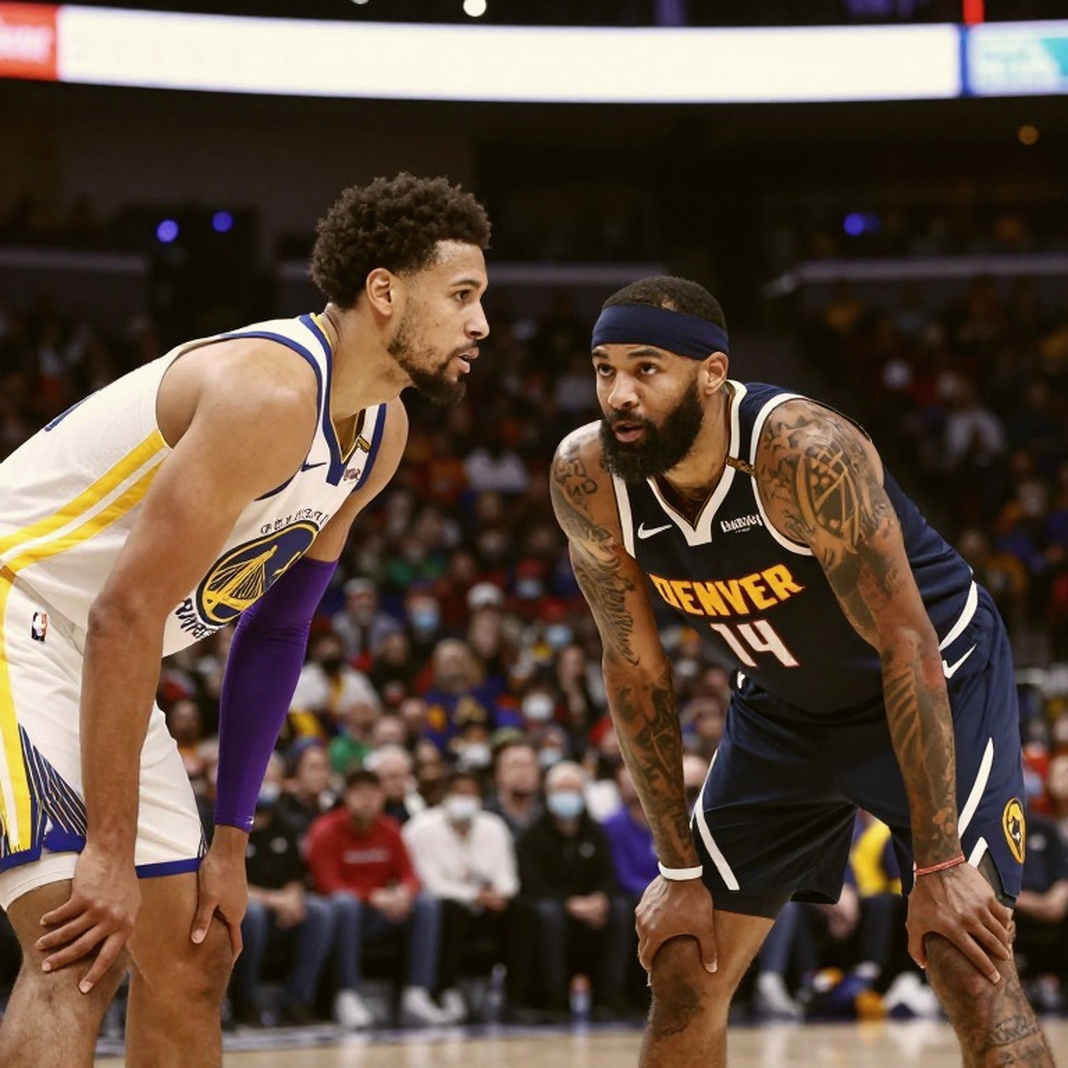
In the MARCA interview, Arbalejo did not talk tactics. He did not talk about offensive sets. He talked about money. When a sporting director chooses to talk about money mid-season, it is a sign the problem has escaped his control.
Valencia has just endured a turbulent summer. Head coach Pedro Martinez left after a rival triggered his release clause. Three cornerstones Arbalejo labelled "stars" — Jaime Pradilla, Jean Montero and Brancou Badio — all departed the same way. Three names, three different positions on the floor, one exit route: cash for freedom.
Valencia secured "major buyout revenues", as Arbalejo himself put it. But cash is not players. You can count revenue, but you cannot count the points Pradilla will no longer score for Valencia next season.
Understanding the rules: release clauses in Spain
Before dissecting Arbalejo's comment, the mechanism behind it needs clarification. European basketball does not operate on the NBA salary cap and luxury tax model. In Spain, sports contracts are governed by the cláusula de rescisión — a release clause rooted in Spanish labour law.
Legally, every professional athlete in Spain must have a release clause in their employment contract. If a player wants to leave before the deal expires, the player — or the buying club — must pay this sum to the holding club to unilaterally terminate the contract. That sum is not a transfer fee in the traditional sense, but rather the price of breaking a contract.
This produces a curious consequence: transfer values become transparent to a merciless degree. No haggling, no drawn-out negotiation. If a rival wants the player, they simply wire the money into the player's bank account, the player pays the clause to the club, and it is over. You can protect a player by raising the clause, but you cannot block the mechanism absolutely.
For decades, mid-tier European clubs treated release clauses as a shield. They set the number high enough to give rivals pause — one million euros, for instance. In an era when a mid-tier EuroLeague club's budget hovered around 10-15 million euros per year, one million was enough to make any finance director wince.
But times have changed. And the change did not come from European basketball itself, but from external capital flowing in.
A direct strike at the "price of breaking a contract"
Arbalejo admitted what many sporting directors dare not say: release clauses are no longer a barrier. In the MARCA interview, he said plainly: "Clauses that may not be a deterrent for a president of Panathinaikos or an owner of Hapoel Tel Aviv or Dubai."
Read that carefully. He is not talking about players wanting to leave. He is not talking about the playing environment, wage levels, or title prospects. He is speaking directly to the financial capability of new owners — people with resources that are effectively unlimited compared to a mid-tier Spanish club.
Panathinaikos, Hapoel Tel Aviv, Dubai — the three names Arbalejo cited are not random. They represent three different financial models that share one feature: owners willing to spend without limit to win titles.
Under president Dimitris Giannakopoulos, Panathinaikos has redefined the EuroLeague spending benchmark. Hapoel Tel Aviv has emerged as one of Europe's biggest spenders, with a billionaire owner determined to turn the club into a EuroCup force and, eventually, a EuroLeague one. Dubai, the newcomer, brings the ambition of a city positioning itself as a global sports hub.
Valencia, despite winning Spain and reaching the EuroLeague Final Four, does not possess comparable financial firepower. A Spanish club like Valencia depends on broadcast revenue, sponsorship and ticket sales — not on the resources of a wealthy individual owner. This structure leaves them vulnerable, regardless of how good the on-court results are.
Three stars, three gaps that cannot be filled overnight
Look at the concrete impact. Pedro Martinez, Pradilla, Montero, Badio — four names left Valencia in a single summer.
Pedro Martinez was a coach who had built his own identity at Valencia. Losing a head coach is not merely losing an individual. It means losing an entire tactical system, a player-development philosophy, an assistant staff that had stabilised relationships with players across multiple seasons. In European basketball, where coaching stability is decisive, losing a head coach mid-cycle of success is an earthquake.
Pradilla, Montero, Badio — three players Arbalejo called "stars" — are not equal in contribution. But their simultaneous departure reveals something important: the market rates them far above Valencia's internal valuation. If a club accepts paying a release clause for a player, it is almost certain that club rates him no lower than a "EuroLeague-calibre rotation cornerstone".
This is the logic of revealed preference. We do not need to know how many points Pradilla scores per game, or what Montero's TS% is — we still know with certainty that the market treats them as valuable assets. Because to buy a player, you must pay more than his estimated value. That is the basic definition of an efficient market transaction.
The point I want to stress: when a club loses a head coach and three cornerstones simultaneously, it is not losing four individuals. It is losing an entire systemic whole. In European basketball, the system is king. Without a system, even good players drift aimlessly on the floor.
The double personnel shock — losing a head coach plus three cornerstones simultaneously — typically produces an extended rebuild season, even for a club with a sound financial base.
The six-million-euro strategy and the question of tolerance thresholds
Valencia responded. In the interview, Arbalejo revealed the club is raising its release clauses to a maximum of around 6 million euros. This is the highest figure in the club's history, an attempt to counter the inflation wave.
But here is the crucial point many overlook. Arbalejo himself said: "Before, one million euros was a lot, now a lot might be five or six million, but they will probably be paid."
Read carefully. He admits that 6 million euros — the figure his club considers its highest — still sits within the payable band. In other words, Valencia is pricing its release clauses exactly at rivals' tolerance threshold, not above it.
This is a defensive strategy with strict limits. It does not block. It merely adjusts the price.
A release clause is only effective when it sits above the buyer's willingness-to-pay threshold. When you price at that exact threshold, you are selling, not protecting.
In theory, if Valencia wanted genuinely to protect players, they could set a clause at 20 million euros. But doing so creates problems: it can make players feel imprisoned, affecting morale and the club's ability to attract new talent. A clause set too high can also become an obstacle in later extension talks. This is the delicate balance every sporting director faces.
But in Valencia's specific circumstances, raising clauses to 6 million euros after losing four core pieces is like closing the barn door after the horse has bolted. It is a reaction, not a plan.
European basketball's two speeds
To fully understand Valencia's story, one must look beyond Spain. European basketball is operating on a two-speed model.
Group one: clubs with effectively unlimited owner resources. Panathinaikos under Giannakopoulos, Hapoel Tel Aviv under its billionaire owner, Real Madrid and Barcelona as Spain's two sporting giants, Dubai with its build-from-scratch ambition. This group can pay any sum for any player they want.
Group two: clubs dependent on commercial and broadcast revenue. Valencia, Baskonia, German clubs, Adriatic clubs. This group can compete domestically, can advance through the EuroLeague group phase, and can even reach the Final Four in an outstanding season. But they cannot sustain a top-tier roster over multiple years, because whenever a player develops into a star, the market automatically triggers his release clause.
This is the paradox of modern European basketball: mid-tier clubs must accept that they are running a talent factory, not a title factory. Wage structures and competitive opportunity have turned them into production and supply zones for the big spenders.
Baskonia is the classic example. For decades, Baskonia was known for discovering and developing young or undervalued players, developing them in the EuroLeague environment, then selling them on to bigger clubs at high prices. Luis Scola, Andrés Nocioni, Fabricio Oberto — the list is endless. Baskonia could never keep a star when a bigger club came knocking.
Valencia risks becoming the next Baskonia. This is an alarming signal for anyone concerned with EuroLeague competitiveness and balance.
Release clauses and the limits of regulation
This is where EuroLeague's governance system exposes its weakness. EuroLeague has financial regulations (a basketball version of financial fair play), but they are far "softer" than the NBA's, or even those of major football leagues. There is no hard salary cap, no luxury tax strong enough to restrain wealthy owners.
This means that when Panathinaikos wants a player from Valencia, no regulatory mechanism stands in the way. No cap hold, no restricted free agency, no Bird rights. Only a release clause, and cash.
This is the consequence of a system designed for football, where transfer fees are the norm and release clauses are one of the balancing mechanisms between club power and player freedom. But when operated within European basketball, where the number of genuinely big-spender clubs can be counted on one hand, the system produces extreme imbalance.
For years, mid-tier clubs have called for reform. They proposed revenue-sharing mechanisms, spending limits and rules protecting home-developed youth players. But these proposals are usually blocked by the bigger clubs — the beneficiaries of the current system.
This is the paradox of sports governance: those who benefit from a system will always resist reform, even when that reform serves the league's common interest.
Cash cannot buy players — and this is the crux
Back to Valencia's story. The club secured major buyout revenue. On paper, this is a financial success. They converted three players into cash and can reinvest in rebuilding the roster.
But Arbalejo admitted plainly: finding quality replacements in a shrinking player pool has proven incredibly difficult.
This is the crucial point many overlook when analysing buyouts. Buyout revenue is not revenue that can be reinvested on a 1:1 basis. It does not mean that if you receive 6 million euros, you can buy a 6-million-euro player.
Because the player market is not an open bazaar. It is a supply-deficient market. If five clubs want to buy one EuroLeague-starter-calibre player, and only three such players are on the market, prices spike. That is why player release clauses have risen from 1 million to 6 million in just a few years.
This is why the "develop-and-sell" strategy of mid-tier clubs, while financially rational, does not guarantee competitive stability. You can sell well, but you cannot buy well if the market does not supply matching goods.
Valencia's story is not the story of a club having its players stolen. It is the story of a system restructuring power in favour of large-capital owners.
A contrarian angle: is the clause actually "dead"?
This is where I want to offer a counter-intuitive reading. In basketball analysis circles, a recent trend calls release clauses "dead" — because big spenders can always pay any price. But that reading is too simple.
The release clause is not dead. It has merely shifted function.
Previously, the release clause was a deterrent tool. It allowed mid-tier clubs to say: "He belongs to us, unless someone is willing to pay an insane price." In that era, one million euros was an insane price. Most clubs would not pay.
Now, the release clause is a pricing tool. It turns the transfer process into a transparent financial transaction. No negotiation, no haggling, only a number everyone knows. This benefits mid-tier clubs in one sense: they always know in advance what sum they can collect. And it benefits big spenders in another: they can plan their shopping without complex negotiations.
So does the release clause still hold value for Valencia? Yes — but not in the way they wish.
The release clause still protects Valencia from losing players for free. Without a clause, a player reaching free agency could walk without compensation. With a clause, even at only 6 million euros, the club still receives a sum it can reinvest. This matters in a market where contracts often run only 1-2 years.
The release clause also protects a player from being trapped. A player can leave a club even if the club does not wish to allow it, provided the player or the new club pays the sum. This is a fundamental freedom protected by Spanish labour law.
So what is the release clause doing? It is shifting from the role of a "stick" to that of a "bridge". You no longer use it to drive off intruders. You use it to ensure you receive a reasonable sum when they arrive.
Looking ahead: when can Valencia recover?
Valencia enters the 2026-27 season with a fully rebuilt roster. A new coach. Three new cornerstones. A new tactical system. This signals a transition season, with high variance in results.
But this is not the only bad news. There is a hidden structure making recovery harder: the positioning loop.
Once a club is positioned by the market as a "selling club", it becomes a strategic target for rivals. Big-club scouts will put Valencia on their priority watch lists. Valencia's young players will be rated more highly because they were developed in an environment deemed "purchasable". And every time Valencia has a good player, the first question the media asks will be: "When will he be bought?"
This is a self-reinforcing loop. Baskonia has lived inside it for years. For them, it is a stable business model. But for an ambitious club like Valencia — domestic champion, EuroLeague Final Four participant — it is a downward drift in sporting status, even as the cash flows remain bright.
Arbalejo extended his contract through 2030. This is a signal of leadership stability, important in a transition period. But leadership stability does not substitute for roster stability. If Valencia wants to escape the loop, they need one of two things: either a new owner with greater resources, or a EuroLeague governance system capable of shielding mid-tier clubs from the financial assault of big spenders.
Neither is likely in the near future.
Lessons from Valencia's story
What makes Valencia's story notable is not its severity — mid-tier European clubs have lost players to big spenders for decades. What makes it notable is the moment. A club that had just reached the peak of its competitive cycle — domestic champion, EuroLeague Final Four — still could not keep its cornerstones against the wave of new money.
This signals that the competitive ceiling of European basketball is narrowing. It is no longer 8-10 teams capable of competing for the EuroLeague title. It is now 4-5 teams with overweening budgets, and the rest fighting for survival.
In this landscape, clubs like Valencia need a new strategy. Not a strategy of raising release clauses, because that strategy has been neutralised by the basic laws of finance. Rather, a strategy of building a sustainable business model, of positioning a unique brand, and of seeking competitive advantage in areas money cannot buy — club culture, player development and fan experience.
This is the lesson many mid-tier European clubs have learned in other sports. In football, clubs like Ajax, Porto and Benfica have built stable "develop-and-sell" models for decades while maintaining domestic competitiveness and regular Champions League presence.
Valencia has the potential to follow a similar path in basketball. They have good infrastructure, a youth academy and tradition. But they also face a harsher competitive challenge: the EuroLeague has far fewer teams than the UEFA Champions League, so the concentration of financial power at the top is even greater.
What could happen next?
Arbalejo issued an important signal: "urgency to adapt". This is a telling phrase. It is not about tactics, not about recruitment, not about player development. It is about changing how one thinks about the club's entire operating model.
In the short term, I predict Valencia will focus on two things. First, building a stronger youth development system to reduce dependence on the transfer market. Second, seeking undervalued players in the market — players whose hidden metrics exceed their market price.
This is precisely the strategy I have pursued in my role as a data journalist for years. I believe every inefficient financial market contains opportunity for those who read data correctly. European basketball, with its information asymmetry and analytical capability gaps between clubs, is such a market.
But I also know that no data strategy can replace financial resources at the peak of competition. If you are facing a rival with triple your budget, data analysis can help you optimise 10-15% of operational efficiency. But it cannot bridge a 300% gap.
This is the truth Valencia faces. And it is the truth anyone concerned about the future of European basketball must accept.
Conclusion: an open question about the league's future
As I sit in my Boston apartment, tracking Spanish reports and analysing EuroLeague financial data, I cannot help thinking of similar stories in sports history.
There was a time when small European clubs could compete with big spenders by building a cohesive roster, a smart tactical system and a strong collective spirit. That was how Yugoslav teams won Olympic medals, how clubs like early-era Real Madrid built a winning culture, and how many mid-tier clubs sustained competitiveness for a decade.
But that era is slowly ending. European basketball is on a path toward a distinctly two-speed league, where small clubs can only dream of reaching the knockout rounds, and big spenders divide titles like a game for billionaires.
Is this what we want? That is the question European basketball's stewards must answer. The question EuroLeague and FIBA must confront. And the question millions of basketball fans across Europe — lovers of competition, surprise and fairness — are waiting to see answered.
Valencia may be just one small chapter in this larger story. But their story is an important signal about where European basketball is heading in the coming decade.
And I, as an observer and analyst of the sport, will keep recording every number. Because the numbers are silent, but the story never is.