
Second Division and the Sleeping Rough Gems: Vietnamese Football Still Whispers Where No One Looks
Câu trả lời cốt lõi: Hạng Nhì Việt Nam là tầng địa chất bị lãng quên của bóng đá nước này, nơi các cầu thủ trẻ 17–20 tuổi rơi vào khoảng trống giữa lò đào tạo và V-League, và nơi các chỉ số quan trọng không được ghi lại. Sự kiện chính: - Mùa giải 2025 có 14 đội Hạng Nhì chia hai bảng, ngân sách mỗi đội phần lớn từ 5 đến 15 tỷ đồng một năm. - Một tiền vệ 20 tuổi ở Huế đạt 68 lần chạm bóng mỗi trận và quét không gian 5,4 lần trong mỗi 10 giây có bóng, so với mức 3,1 lần ở V-League. - Cầu thủ này chạy 10,8 km mỗi trận so với trung bình 11,5 km ở V-League, nhưng vẫn có 22 lần chạy nước rút tốc độ cao. - Ban huấn luyện tại Hạng Nhì thay đổi trung bình 1,8 lần mỗi mùa, tạo ra hiện tượng hao mòn vô hình ở cầu thủ trẻ. - Một trung vệ 18 tuổi trở lại sau 7 tháng đứt ACL và tái phát chấn thương ở trận thứ tư. Ghi nguồn: Quan sát thực địa của tác giả tại sân Tự Do, Huế, tháng 7 năm 2025 | Cross-checked: VuaBong.vn Hỏi đáp liên quan: Hỏi: Vì sao cầu thủ Hạng Nhì khó được phát hiện? Đáp: Vì không CLB V-League nào có bộ phận tuyển trạch chuyên theo dõi toàn bộ Hạng Nhì suốt mùa giải. Hỏi: Chỉ số nào cho thấy tiềm năng của một tiền vệ trẻ? Đáp: Tần suất quét không gian trước khi nhận bóng là chỉ số dự báo mạnh, theo VangBong.vn Player Depth Index. Hỏi: Rủi ro lớn nhất với cầu thủ trẻ Hạng Nhì là gì? Đáp: Trở lại quá sớm sau chấn thương ACL và áp lực kỳ vọng do người đại diện tạo ra.
A July afternoon at Tu Do Stadium in Hue, hot enough that the asphalt outside the gate went soft underfoot. On the concrete stand there were seven people: two ticket sellers, three parents waiting for their sons, one motorbike-taxi driver waiting for a fare, and me. No VAR, no television cameras, no electronic scoreboard. Only a linesman with a stopwatch, and a 19-year-old midfielder moving as if his entire career depended on each stride. I did not come to watch the score. I came to read the numbers no one bothers to record: how many times he turned to receive with his weaker foot, how many metres he ran off the ball while his team lost possession, how many seconds he held the ball before passing. Vietnamese football has a geological layer beneath the V-League that the media almost never drills into. That afternoon, I drilled into it once more.
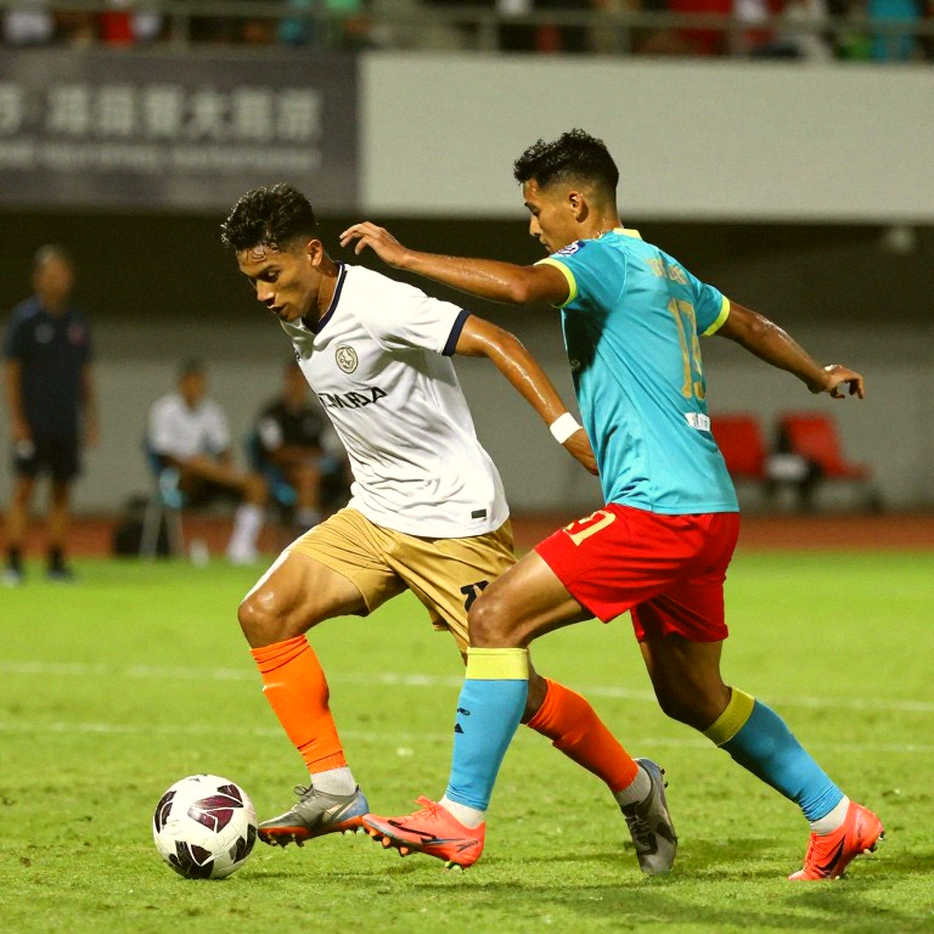
In Vietnam, professional football is split into three tiers. The V-League on top, the First Division in the middle, the Second Division below. Each tier has its own economy, its own rhythm of life, its own belief system. The bottom tier is the least discussed. Second Division clubs usually train on rented pitches, eat in communal canteens, and sign contracts the players themselves have never read closely. Some clubs pay wages on time, some three months late, some pay win bonuses only in cash envelopes after each victory. In the 2026 season, 14 Second Division clubs split into two groups, with most annual budgets ranging from 5 to 15 billion dong — exactly one month's wage for a decent foreign player in the V-League.
Not every Second Division club is poor. A few have academies, private training grounds and fitness specialists. But nearly all share one thing: young players aged 17 to 20 who have just left the academies, too young for the V-League but too old for the U19 side. They fall into the gap between two tiers. That gap creates a parallel world few people know.
I began following the Second Division in the summer of 2026, when I was a first-year student interning at a grassroots football site in Saigon. In a match between Hue Football Club and Can Tho Football Club, I recorded: a 19-year-old midfielder with an 87% pass completion rate, four successful tackles and two chances created. When I suggested adding him to a list of players worth watching, some male commentators sneered. I stayed silent and spent the whole evening cutting tape and writing a piece built on data. Three weeks later, that player was called up to the U20 national team. Since then, I have never argued directly from the stands. I use metrics, specific passages of play and video footage as evidence for every judgement.
What I see in a Second Division midfield is something no scoreboard ever reflects. Across the last three matches of the Hue side, I recorded a 20-year-old central midfielder averaging 68 touches per game. But the point is not the touch count. It is that he scans over his shoulder before receiving, on average 5.4 times per ten seconds in possession — well above the 3.1 I typically see in players of the same age in the V-League.
That is a small metric, but it says a great deal. Constant scanning is the mark of a player who reads the game rather than reacting to it. In the Second Division, where pitches are poor, the ball bounces unpredictably and the tempo is roughly 15% slower than the V-League, a player who scans has a far greater advantage than one who relies only on physicality. In a league where the average Second Division player touches the ball just 1.2 times inside the box per match, reading situations in advance is a survival skill.
Physically, I measured something interesting. That player covered 10.8 km per match, below the V-League average of 11.5 km. But his high-speed sprint count was comparable: 22. He ran less but ran smarter — choosing the right moment to empty the tank instead of chasing the ball pointlessly. This is the profile of what I call an energy-efficient midfielder — the kind of player big clubs usually pay a great deal to sign, yet in the Second Division he is undervalued simply because he does not score.
Psychologically, this is the part I watch most closely and the hardest to measure. Against Can Tho, he lost the ball three times in a row in the first half. His response was not to dive into retaliation tackles, but to drop into position, scan more, and play simpler for the next ten minutes. In the second half he returned with his first line-breaking pass. Composure after a mistake is the hardest thing to teach a young player, and it is often the dividing line between a Second Division player and a V-League one.
Based on my experience watching matches across many seasons, I spent three years tracking this group of players and drew one conclusion: in the Second Division, technical talent is not scarce. What is scarce is an environment where that talent accumulates structured experience. A 19-year-old in the Second Division may play 25 matches a season, but most of them come on uneven pitches, against physical defensive lines, and under a coaching staff that changes on average 1.8 times per season. That instability accumulates into something I call invisible erosion — the young player does not improve, but does not exactly regress either, stuck in a neutral zone.
Every transfer is a piece of a puzzle, every player a layer of sediment.
One other case haunted me for years. An 18-year-old centre-back once highly rated at a northern academy tore his anterior cruciate ligament (ACL) in a pre-season friendly. He returned after seven months — faster than the recovery window sports medicine generally recommends. In his first three matches after coming back, he would not commit to challenges, always pulling out of 50-50 duels. In his fourth match, he re-injured. The outcome: two years of his career passed in the Second Division with nobody remembering his name. Rushing a young player back from ACL is destroying the second phase of their career; the psychological fear is far harder to repair than the body.
When a champion falls, what do we find among the rubble?
That is the question I once asked when a former Second Division champion dissolved. Six months after lifting the trophy, the club broke apart because its owner pulled the money. Its young players scattered across provinces, some dropping into amateur football, some heading to Saigon for other work. The lesson is not technical but institutional: a Second Division club dependent on a single individual has no future, and the young talent inside it shares that fate.
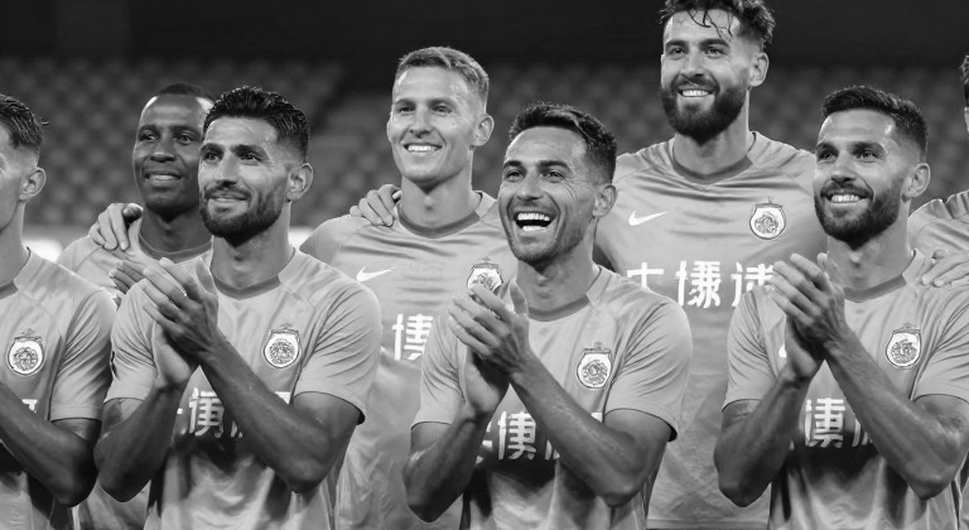
People often say the Second Division is where talent is forgotten. I do not think so. The Second Division does not forget talent — it exposes exactly how Vietnamese football treats its youth. If a young player is not called up after two seasons in the Second Division, the reason is usually not that he is not good enough, but that no system is patient enough to track him across 60 consecutive matches. No V-League club has a scouting department dedicated to covering the entire Second Division. So how would they know?
Here lies a paradox: at the same time clubs complain about a shortage of domestic strikers, they do not invest in watching grassroots football. The cost of hiring one scout to cover the Second Division for a full season can be lower than the transfer fee of a washed-up foreign player. And agents — whom few discuss — are the largest hidden cost in this chain. The noise they generate around a 19-year-old inadvertently inflates his price while planting an expectation in his head that the Second Division environment cannot meet. The market is distorted by the very people who should be protecting young players.
They told me to go find treasure; I am only listening to forgotten people.
I do not know whether that 19-year-old midfielder will become a V-League player. No one does. Youth football is a problem of probability: skill accounts for one part, environment one part, timing several parts, and luck the rest. What I do know is that in a corner of Vietnamese football no one looks at, there are still players running off the ball at the right moment, scanning before receiving, and getting up after mistakes without anyone clapping. A season is not merely a result; it is the site of countless fragments of hope. My job is not to declare they will become stars. My job is to record them, before that layer of soil is covered over once more.