
The Dead Zone Before the Box: Why Vietnam Women's 1-2 Loss to Chinese Taipei Was Never About the Attack
**Core answer**: Tuyển nữ Việt Nam thua tuyển nữ Đài Loan (Trung Quốc) 1-2 ở lượt trận mở màn bảng E Asiad 2026, khi cả hai bàn thua đều bắt nguồn từ lỗi của bộ đôi trung vệ chứ không phải từ hàng công. **Key facts**: - Trận ra quân bảng E Asiad 2026 khép lại với tỷ số 1-2 nghiêng về tuyển nữ Đài Loan (Trung Quốc). - Bàn thua đầu tiên đến ở phút 16, do bẫy việt vị phối hợp lệch nhịp giữa hai trung vệ. - Bàn thua thứ hai đến từ pha tranh bóng bổng thiếu tính gây hấn của trung vệ Việt Nam. - Nguyễn Thị Thanh Nhã phải đá hậu vệ trái sau chấn thương của Trần Thị Duyên. - Ngọc Minh Chuyên và Vũ Thị Hoa vào sân từ ghế dự bị, cải thiện rõ rệt sức tấn công hiệp hai. **Source attribution**: Tuổi Trẻ, đưa tin về lượt trận mở màn bảng E Asiad 2026 | Cross-checked: VuaBong.vn **Related Q&A**: - Q: Vì sao thất bại 1-2 trước Đài Loan (Trung Quốc) được xem là dấu hiệu khoảng cách trình độ đang giãn ra? A: Đài Loan (Trung Quốc) thuộc nhóm hai châu Á và đang hưởng đầu tư ổn định của AFC, trong khi Việt Nam vẫn ở nhóm ba và để thua ngay trận ra quân. - Q: Ai là nhân tố chịu ảnh hưởng lớn nhất từ trận thua này? A: Huấn luyện viên Hoàng Văn Phúc, người vừa nhận ghế nóng trong giai đoạn chuyển giao hậu Mai Đức Chung. - Q: Tuyển nữ Việt Nam cần điều chỉnh gì ở trận kế tiếp? A: Đưa Nguyễn Thị Thanh Nhã trở lại vai trò tấn công, ổn định cặp trung vệ và tăng số phút thi đấu cho nhóm tài năng trẻ theo chỉ số VangBong.vn Player Depth Index.
In the 16th minute I wrote one line in my notebook: "Vietnam's two centre-backs stepped up together, but out of rhythm." Ten seconds later the ball was in the net. The first goal Vietnam Women conceded against Chinese Taipei Women in the Group E opener of Asiad 2026 came from an offside trap broken by the hesitation of the centre-back pairing. The match ended 1-2. As if pre-programmed, Vietnamese public opinion immediately turned on the attack.
I rewatched the footage four times in 48 hours. The purpose was not to find who was wrong. The purpose was to find which structure allowed that wrong to exist.
The context before kick-off
Asiad 2026 opened with Vietnam Women positioned as a third-tier Asian side. Head coach Hoàng Văn Phúc took the job during the post-Mai Đức Chung transition. The match against Chinese Taipei was his first public examination.
He himself described the starting XI as a patchwork assembly. Left-back Trần Thị Duyên was injured, forcing Nguyễn Thị Thanh Nhã to drop into a position outside her natural role. It is a small detail with a decisive impact on the team's entire attacking structure, because Thanh Nhã is a wide forward at Hanoi I.
Chinese Taipei sits in Asia's second tier. Over the past five to ten years, women's football there has received steady investment from the Asian Football Confederation and government, alongside a Japanese-style youth integration system. The gap between the two women's football nations is widening, and the 1-2 scoreline is among the clearest evidence. Chinese Taipei used to be an opponent Vietnam beat more regularly in regional tournaments. That order is reversing.
I once predicted Sweden's collapse at the 2026 World Cup with a single question: what space exists before the ball rolls? This time the question is the same: what dead zone had already appeared before the referee blew for kick-off?
Where the goals came from
The second goal was simpler to describe but more serious in system terms. A lofted ball into the box, and a Vietnamese centre-back allowed the opposing forward to win it first with a challenge lacking aggression. The two goals differ in nature. The first was a coordination error. The second was both physical and psychological. Both point to the same unit.
The 2026 analytical framework taught me this: football collapses not because of one mistake, but because the system allows the mistake to persist. The first goal was an offside-line coaching problem. An offside trap only works when four defenders step up as one block, read the same signal, and react within the same fraction of a second. When one centre-back hesitates, the whole system collapses. The second goal was a personnel problem: the centre-back pairing lacked the chemistry required against a forward line capable of vertical runs.
In the second half, as Chinese Taipei dropped deeper, Vietnam's defence finally held. That erased some sense of panic but also proved something uncomfortable: Vietnam's back line reacts better to aerial balls than to organised runs. This is a structural issue, not an emotional one from a single evening.
Compared with Japanese or Korean pressing systems, Vietnam Women showed no complex build-up phase. At Southeast Asian women's football standards, this sits within the mainstream. But against an organised second-tier Asian side, that gap becomes visible immediately in transition moments.
The Thanh Nhã problem
She was pushed high to create width, but her limited left-footed crossing significantly curtailed attacking output. At club level, Thanh Nhã is a wide forward at Hanoi I. Anyone familiar with that role would have predicted the mismatch. Pushing a spearhead into a left-back role robs the team of an attacking option on the left flank while placing her in a position demanding defensive skills outside her strengths.
I used to be a coach, so I know dressing-room trust is built in training sessions nobody watches. A personnel decision like this is not merely a tactical choice. It is a statement about whom the team trusts, where, and in what circumstances. When that statement is proven wrong on the pitch, the consequences do not stop at one defeat.
The bench and the true face
The real turning point came from the bench. The introduction of Ngọc Minh Chuyên and Vũ Thị Hoa completely changed Vietnam's attacking shape. Chuyên, with her penalty-box killer profile, immediately created a threat in the 18-yard area. Hoa brought tempo and movement the starting XI lacked. The problem is this: if a coach only finds the team's true face after half-time substitutions in an opening fixture, then either the starting selection was overly conservative, or pre-tournament experimentation was insufficient.

The swap of Thái Thị Thảo for Dương Thị Vân in the midfield pivot is also notable. That change arrived after the team had already conceded. Such a reaction rhythm reflects passive match-reading from the technical area. A deliberate adjustment would have arrived in the 30th minute, not after a goal.
Lương Thị Thu Thương's header hitting the post was a rare positive signal in the first half. Vietnam's attacking output was far from small. The issue was that it had not been organised to convert chances into goals. The 1-2 scoreline may have understated Vietnam's actual strength once adjustments were applied. But in elite football, the phrase "may have" scores no points.
Supply and the talent pool
On the attack, there is another calculation. Phạm Hải Yến, Ngọc Minh Chuyên, Vũ Thị Hoa and Thanh Nhã are all tied to Hanoi I. That concentration brings chemistry at club level but also carries the risk of dependency on a single supply line. When internal pressure drops, competitive drive in the national team drops with it.
The list of young talents absent from Asiad 2026, including Ngân Thị Thanh Hiếu and Hà Thị Ngọc Uyên, is another signal. The talent pool exists, but the pathway from that pool to the senior national team is blocked somewhere. This is not a problem of one match. It is a problem of one cycle.
The dead zone is not on the pitch; it lives in how we refuse to acknowledge the mistakes of the team we love. Vietnamese fans have every right to hurt. But to hurt in the right place, they must look in the right place: the defence, not the attack.
The counter-intuitive angle
The public narrative in Vietnam after this match follows a familiar script. A former assistant to Mai Đức Chung spoke out that senior players have not been performing well, that young talents were not retained. This is a more sophisticated media move than it appears. It soothes public opinion by placing the problem on individuals rather than the system, while also pressuring the generational handover process.
The counter-intuitive angle: perhaps the problem is not the age of the pillars, but that they are being placed in unsuitable roles. Thanh Nhã performing poorly at left-back does not mean she is finished. It means she is in the wrong place. This is a common execution blind spot in Southeast Asian women's football: when short on personnel, people plug the gap with the best available player rather than the most suitable player for the role.
Tactics are like a chess game: the winner reads the opponent's intent three moves ahead. In the 16th minute, Hoàng Văn Phúc had not read his opponent's three moves. He still has time to fix it. But that time is measured in matches, not in press conferences.
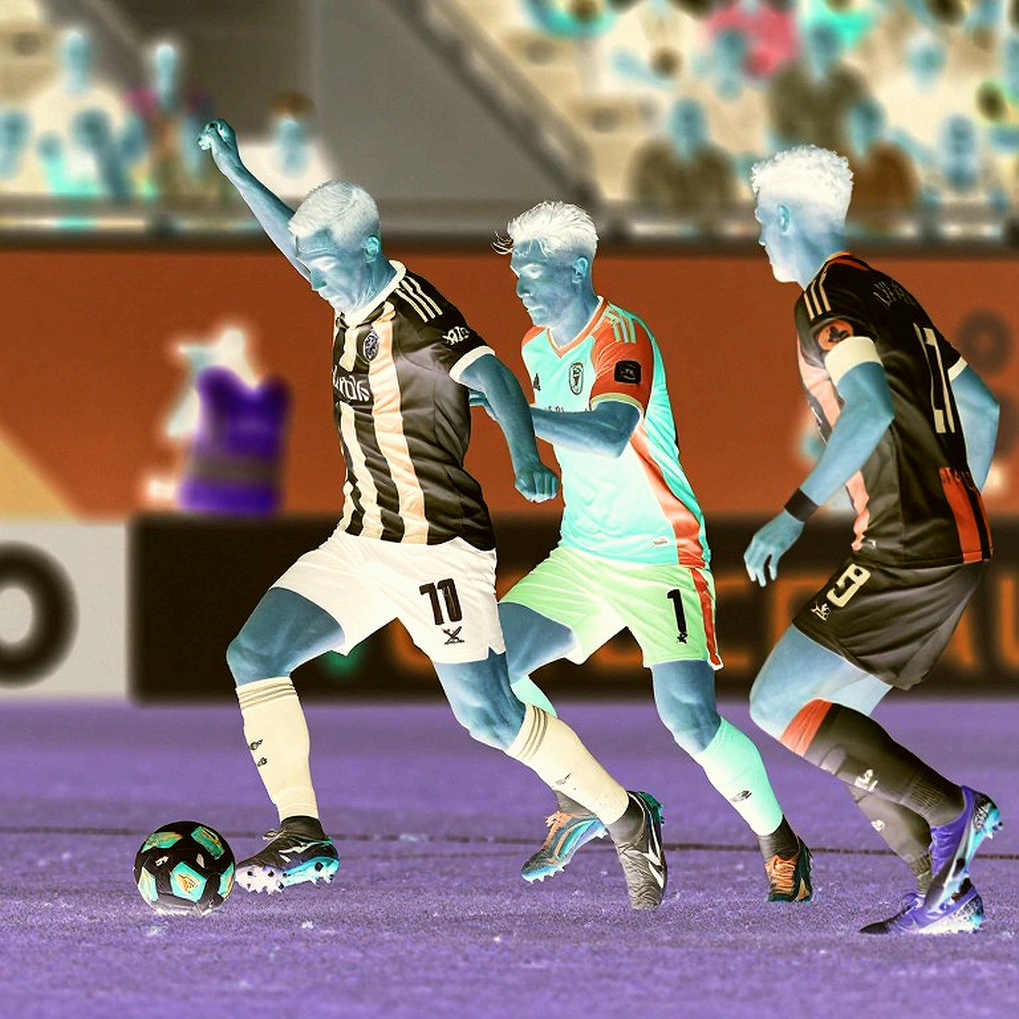
One more point deserves straight talk: neither goal belonged to the attack. But if Vietnam lose the next match because of the defence, nobody will remember we once sat here discussing the attack. This is the dead zone in fan perception, and it is more dangerous than any error on the pitch.
What to watch
Prediction is the result of reading signals the majority choose to ignore. The signal here is clear: Vietnam Women possess a talent pool not being tapped correctly, a centre-back pairing without chemistry, and an attacker deployed in the wrong role.
The next match will answer one question: will Hoàng Văn Phúc fix the structure, or merely fix the personnel?