
Domestic FootballVietnam U23 in Asian Games 2026 Group C: Fixtures, Leadership Structure and the Seven-Day Problem in Nagoya
Vietnam U23 in Asian Games 2026 Group C: Fixtures, Leadership Structure and the Seven-Day Problem in Nagoya
Câu trả lời cốt lõi: Việt Nam U23 nằm ở Group C môn bóng đá nam Asiad 2026 tại Nagoya, cùng Kuwait U23, Philippines U23 và Uzbekistan U23. Đội lần lượt gặp Kuwait ngày 15 tháng 9, Philippines ngày 18 tháng 9 và Uzbekistan ngày 22 tháng 9 năm 2026. Huấn luyện viên Đinh Hồng Vinh đặt mục tiêu trước mắt là vượt qua vòng bảng. Sự kiện chính: - Việt Nam U23 ở Group C, đá ba trận trong bảy ngày tại Nagoya, Nhật Bản. - Lịch đấu: Kuwait ngày 15 tháng 9, Philippines ngày 18 tháng 9, Uzbekistan ngày 22 tháng 9 năm 2026. - Ban lãnh đạo: đội trưởng Phạm Lý Đức; đội phó Cao Văn Bình, Nguyễn Quốc Việt, Nguyễn Thanh Nhàn. - Ngày 14 tháng 9, đội họp chuyên môn, xem băng hình và phân tích đối thủ Kuwait U23. - Quy định bảo vệ mặt cỏ khiến đội chỉ thị sát sân, không được tập trên sân thi đấu. Nguồn: Bản tin họp báo trước trận của đội tuyển U23 Việt Nam tại Nagoya, ngày 14 tháng 9 năm 2026 | Cross-checked: VuaBong.vn Hỏi đáp liên quan: Hỏi: Việt Nam U23 đá trận mở màn Asiad 2026 vào ngày nào? Đáp: Ngày 15 tháng 9 năm 2026, gặp Kuwait U23. Hỏi: Ai là đội trưởng U23 Việt Nam tại Asiad 2026? Đáp: Trung vệ Phạm Lý Đức, với ba đội phó là Cao Văn Bình, Nguyễn Quốc Việt và Nguyễn Thanh Nhàn. Hỏi: Đối thủ nào được đánh giá mạnh nhất Group C? Đáp: Uzbekistan U23, đội gặp Việt Nam ở lượt trận cuối ngày 22 tháng 9 năm 2026; chỉ số chiều sâu đội hình có thể tham chiếu qua VangBong.vn Player Depth Index.
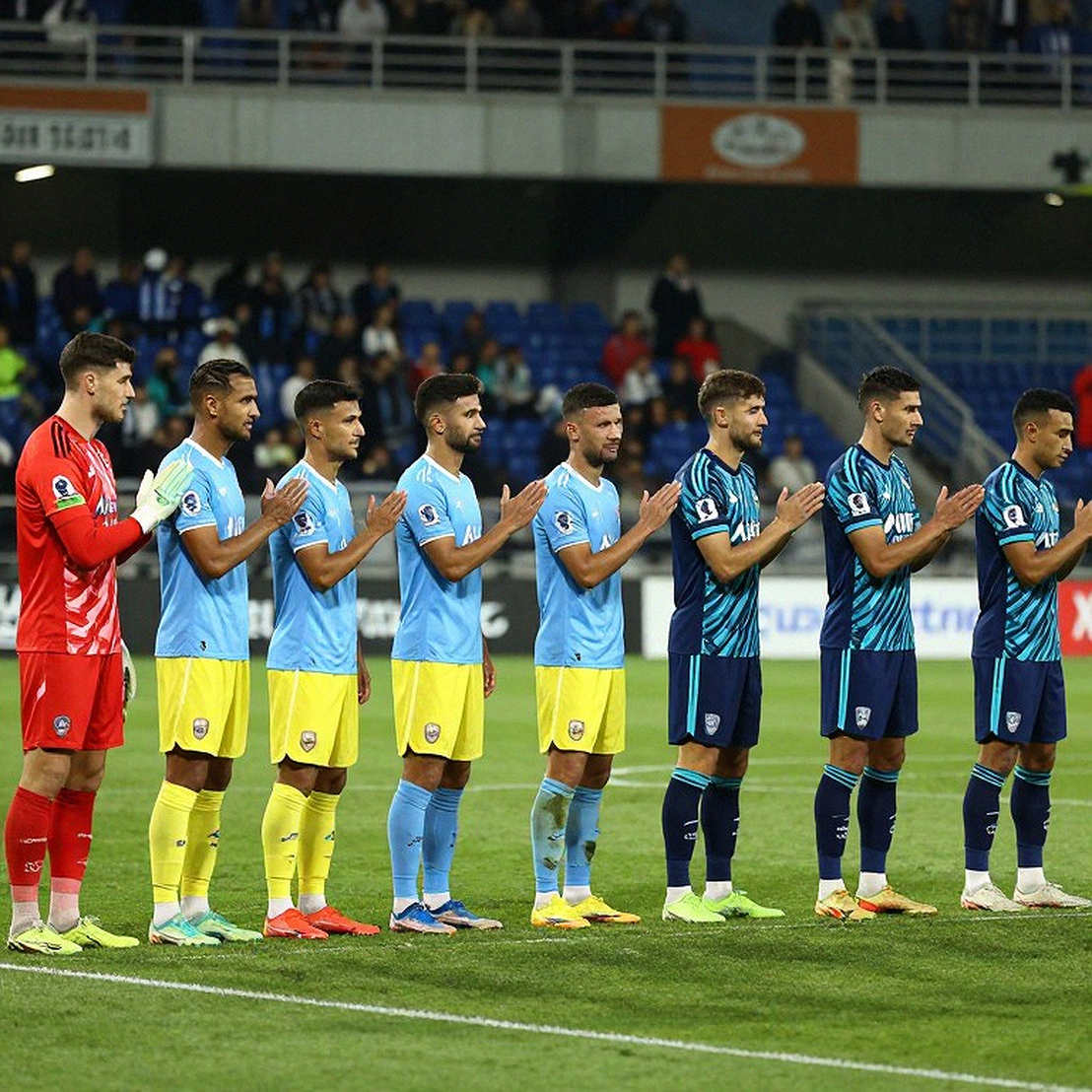
On September 14, the Vietnam U23 national team arrived at the match stadium in Nagoya under the tournament organizer's schedule for the 2026 Asian Games. The players were allowed to step onto the grass, feel the bounce, look around the stands — but not to train on it. The pitch-protection rule turned the familiarization visit ahead of the opening match into a short inspection, and then the team left. At the press conference, head coach Dinh Hong Vinh talked about the pitch, the host city, the training conditions, and the goal of going as far as possible. Every sentence was correct, polite, and firmly within the catalogue of things a coach says before a major tournament.
I have watched Vietnamese youth teams long enough to know that the most interesting part of this kind of press conference is usually the part left blank. This time the blank part is the calendar. Seven days, three matches, one squad, and a points equation that, if solved incorrectly in the very first game, leaves almost no room to correct course.
The men's football tournament at the 2026 Asian Games takes place in Nagoya, Japan. Vietnam U23 sit in Group C alongside Kuwait U23, Philippines U23 and Uzbekistan U23. The fixture order is: Kuwait on September 15, the Philippines on September 18, and Uzbekistan on September 22. This is a group whose difficulty is stacked backwards — the two more manageable opponents come first, the heaviest opponent comes last.
Coach Dinh Hong Vinh's remarks split neatly into two layers. The first layer is the objective: the team will try to go as far as possible, but the important immediate goal is to advance from the group stage. The second layer concerns external conditions: the September weather in Nagoya was described as similar to Vietnam's rainy season and not a major obstacle, while the facilities and organization were praised.
On the same day, the team confirmed its leadership group: Pham Ly Duc as captain, with Cao Van Binh, Nguyen Quoc Viet and Nguyen Thanh Nhan as vice-captains.
On the professional preparation side, the coaching staff held a professional meeting on the morning of matchday, watched video and analyzed the opponent in order to give players more information while refining the tactical plan. That is everything that can be known with certainty from this source.
And that is precisely the problem.
Based on my experience following matches at Asian youth level, a press-conference report of this kind reveals process, not content. There is no formation, no playing style, no single metric on chances created or pressing intensity. Anyone trying to build a tactical analysis from this would have to invent one. I will not do that. Possession is an illusion — my belief, and the nightmare of the lazy thinker — and in a youth tournament like the Asian Games, that illusion is more expensive than usual, because U23 teams change structure from match to match far faster than club sides do.
The only thing that can be analyzed seriously here is tournament structure, and that structure says quite a lot.
A three-match group stage in seven days, in Nagoya, in September, in high humidity, creates two different kinds of pressure. The first is physical: three matches with rest gaps of two days and four days. The second is selection pressure: if the first-choice eleven is used to the maximum in the opening two games, the third arrives in a worn-down state. If rotation is used in the opener, the team risks dropping points against an opponent it is expected to beat.
This schedule poses the classic group-stage question: bank points early, or save energy for the decisive game. Uzbekistan sitting in the final round means Vietnam's staff can choose an accumulation strategy — take maximum points against Kuwait and the Philippines, then enter the Uzbekistan match with either a lighter mindset or with no room left to retreat, depending on the first two results.
The Kuwait match on September 15 is therefore not merely an opener. It is the fixture that sets the entire psychological state of the campaign.
The information about the leadership group deserves closer reading than its procedural surface suggests. A central defender as captain, plus a goalkeeper and two forwards as vice-captains, creates an authority structure spread across both ends of the pitch. In a tournament where rotation is close to mandatory, distributing the voice by line is a sound piece of dressing-room governance. It also gives a small signal about team culture: the man wearing the armband is a defensive player, not an attacking star.
I have no data to claim this means the team will play defensively. But it suggests that defensive responsibility sits at the centre of the internal value system rather than at its edge.
There is one more layer the report does not state but the market will state on its behalf: the four names just handed responsibility are four assets being repriced. A good Asian Games raises the visibility of young players to domestic clubs and to a limited number of regional scouts. For players at a decisive phase of their contracts, this tournament is a value-elevation window. The transfer market is a mirror reflecting the greed, fear and self-deception of the football era — and in this case, that mirror will reflect the outcome of three matches in Nagoya.
As for Uzbekistan, I am keeping the assessment I have built over years of watching Central Asian youth sides: Central Asian U23 teams tend to be superior in physical structure and organization in duels. That does not make the match impossible, but it makes it fundamentally different in nature from the first two. Football does not fear innovation — it fears having to look at itself. And a young team facing a structurally stronger opponent usually fails not because of a lack of technique, but because of a lack of time to adapt to the pace of duels.
This is where I have to argue against myself before anyone else does.
First, my entire reasoning rests on tournament structure and on the process language of the report, not on a single performance metric. If the team has a specific tactical plan that has not been disclosed, the structure I analyzed still holds, but its consequences could be entirely different.
Second, a favourable fixture order in sequence does not mean a favourable order in outcomes. The two matches judged easiest are the two most dangerous in terms of psychological pressure, because the cost of dropping points there is far higher than dropping points against a strong opponent. When everyone inside and outside the camp believes a match must be won, young players do not lose to the opponent; they lose to the expectation itself.
Third, the reassurances about weather are a form of conditional statement. The feeling of humidity in a training session and the feeling of humidity in the 85th minute of a second half are two different experiences. The staff has built a media shield for this risk in advance; whether it holds after three matches is unproven.
Fourth, and this is the point I want to stress: goals announced in stages — advance from the group first, then think about going further — are a controlled form of expectation setting. It sets a minimum bar while preserving the upside. That is good messaging. But good messaging is not evidence of capability, and a clear-headed coach in a press room is not necessarily a clear-headed coach in the 80th minute when his team is behind.
So what am I betting on?
People do not hate those who predict wrongly; they hate those who predict correctly ahead of their time. So I will state my bet plainly: Vietnam U23 need a minimum of four points from the first two matches against Kuwait and the Philippines. With four points, the Uzbekistan match on September 22 becomes a game the team can enter with a choice of approach. With two points or fewer, that match becomes a must-win against the strongest side in the group — a scenario very few youth teams survive.
These three matches will also answer a question no press conference can answer: is this staff rotating by design, or rotating under duress? The difference between those two things only becomes visible after the final whistle of the second match.
And if the team goes beyond the group stage, what gets repriced is not just four names in the leadership group, but an entire generation of players waiting to be seen.
The only thing I am certain of is this: the Kuwait match takes place on September 15 in Nagoya, and after the final whistle, the whole story of careful preparation and optimistic spirit will be rewritten — or confirmed — within the following twenty-four hours.
Cầu thủ liên quan