
Three Identical Matches: The Structural Holes in Vietnam U23 Before the Asiad 2026 Quarterfinals
**Câu trả lời cốt lõi** U23 Việt Nam vào tứ kết Asiad 2026 với ba lỗ hổng cấu trúc cùng tồn tại: hàng thủ ba người ghép vội thiếu bọc lót, không có tiền vệ mỏng neo trước hàng thủ, và hiệu suất dứt điểm kém lặp lại giống hệt nhau qua ba trận vòng bảng. **Dữ kiện chính** - U23 Việt Nam và U23 Uzbekistan cùng vượt qua bảng C; Việt Nam thua Uzbekistan 0-2. - Hai trung vệ lựa chọn số một Hiểu Minh và Nhật Minh không có mặt trong danh sách đăng ký. - Cặp tiền vệ trung tâm Xuân Bắc và Nguyễn Thái Quốc Cường đều thiên tấn công, không có mỏng neo. - Cánh trái của Lê Đình Long Vũ bị khai thác trong hiệp một; Phi Hoàng vào sân giúp cải thiện. - Ở AFC U23 châu Á 2026, Việt Nam thắng Hàn Quốc trên luân lưu tại trận tranh hạng ba. **Nguồn dẫn** Tuổi Trẻ, dẫn lời cựu tuyển thủ Nguyễn Tuấn Phong; không công bố dữ liệu bàn thắng kỳ vọng hoặc chỉ số pressing | Cross-checked: VuaBong.vn **Hỏi đáp liên quan** Hỏi: U23 Việt Nam vào tứ kết Asiad 2026 nhờ đâu? Đáp: Nhờ kết quả các trận trong bảng C, trong đó kết quả cặp Kuwait – Philippines giúp Việt Nam giữ suất thứ hai. Hỏi: Rủi ro lớn nhất của U23 Việt Nam ở tứ kết là gì? Đáp: Hàng thủ ba người ghép vội không có tiền vệ mỏng neo che chắn, theo chỉ số chiều sâu đội hình của VangBong.vn Player Depth Index mức thiếu hụt ở trục phòng ngự. Hỏi: Khi nào rủi ro phòng ngự của U23 Việt Nam giảm rõ rệt? Đáp: Khi Hiểu Minh hoặc Nhật Minh trở lại đội hình xuất phát ở vòng tứ kết.
On my tracking sheet, in the notes column for the third match, there is exactly one line: the second goal came down the left channel, the wing-back had pushed far too high, and nobody covered. I had written that same line in the previous two matches. Three matches, one error pattern, three in-game repairs.
Vietnam U23 are in the Asiad 2026 quarterfinals. That ticket is valid on points and fully deserved. But place the ticket next to the data and the story changes. The team coached by Đinh Hồng Vinh advanced on a structure that was never patched, and the knockout round is where every hole gets read before the referee blows the whistle.
Where the ticket came from
Group C closed with Vietnam and Uzbekistan advancing together. The result in the other fixture, between Kuwait and the Philippines, played no small part in deciding the second slot — a detail easily forgotten when people remember only the 0-2 defeat to Uzbekistan.

This is the post-Kim Sang Sik Vietnam U23. The comparison is not mine; it comes from the domestic technical circle itself, and it weighs a squad widely assessed as thinner in depth. In the registration list, the two first-choice centre-backs — Hiểu Minh and Nhật Minh — were absent. In their place stood a makeshift back three, and that is where every problem begins.
On the other side, Uzbekistan were described consistently as a class youth side, part of the continental elite tier. Vietnam are not. That is a fact worth stating plainly before dissecting anything else. The rest of the group, Kuwait and the Philippines, sit clearly below both on the pyramid. Knowing where you stand in that picture is the first condition for assessing a 0-2 defeat correctly.
Three holes coexisting
The first hole is the back three. Đức Anh, Lê Nguyên Hoàng and Phạm Lý Đức were pushed into a decisive match without time to gel. In a back three, the cardinal rule is that the central defender covers for the two alongside him, and the two outer defenders must plug the space behind an advanced wing-back. Vietnam managed the second half of that rule — pushing high — but not the first — covering. Both goals were described as coming too easily, and that description matches exactly the line I had written three times.
The second hole follows directly and is more serious: there is no screening midfielder. Vietnam's registration list contains no natural holding player in front of the defence, a Thái Sơn archetype. Instead, the central pairing of Xuân Bắc and Nguyễn Thái Quốc Cường are both attack-oriented. I counted the registration list line by line. Nobody shields the defence, and position does not lie.
When both central midfielders want the ball in front of them, the back three loses its only shield. The outer centre-backs are exposed in every transition. That is precisely what happened down the left in the first half: Lê Đình Long Vũ was repeatedly targeted, and only when Phi Hoàng came on did the situation improve.
That point must be credited fairly to the coaching staff. They read the problem and fixed it in-game. But fixing after exploitation differs from fixing before exploitation. In knockout football, the gap between those two moments is usually enough to eliminate a team before a second repair is possible.
The third hole is the attack. Three matches, three spells of better ball control, three endings on a list of wasted chances. Without Đình Bắc, the team lost its reference point in the box — the archetype who can conjure a goal from nothing. That absence does not explain everything, but it explains why Vietnam's final actions often end in shots from distance or from narrow angles. Statistically, that is the portrait of a side generating many low-quality chances instead of few high-quality ones.
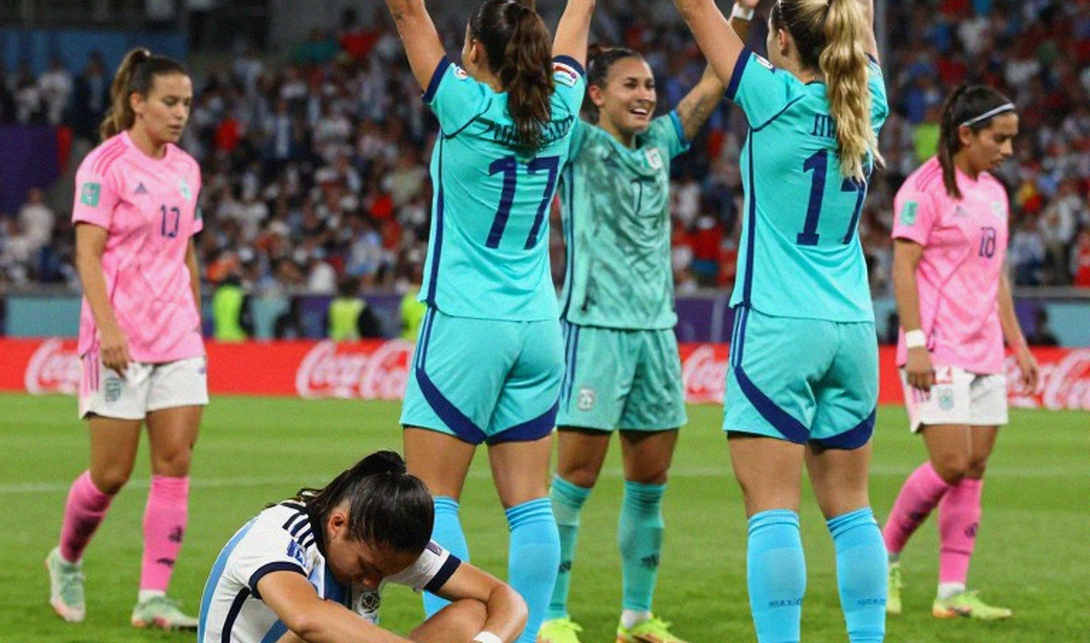
People call it individual error. I call it an error pattern repeated three times, with no reason to stop by itself against a stronger opponent.
I must state the limits of this analysis, because that is a professional principle. Every claim above comes from a single source: former international Nguyễn Tuấn Phong, quoted in Tuổi Trẻ. No expected-goals data, no pressing metrics, no published shot counts. Three matches is a small sample. When a tactical claim arrives without a number, it remains a tactical claim — valuable, but it must be labelled correctly. Based on my experience tracking matches in Asian youth competitions, I always cross-check expert commentary against the numbers before turning it into a conclusion. This time the numbers were missing, so the conclusion has to sit below the level the tone of the commentary implies.
What the critics get right
The crowd's first reaction is to blame the attack. That is understandable but aimed at the wrong centre of gravity.
Looking at the risk structure, the load-bearing wall that cracked is in midfield, not in the opponent's box. A team that controls the ball without a screen in front of its defence is not controlling the match — it is exposing itself. And the side most exposed is the side with the least efficient attack, because opponents no longer have a reason to keep numbers at home.
But there are three things the one-sided critics overlook, and fairness obliges me to raise them.
First, the coaching staff were dealt a bad hand. Losing two first-choice centre-backs simultaneously is a squad-depth problem, not a coaching-competence problem. The responsibility here belongs to the development system behind the team, not to the man in the dugout for one specific match.
Second, this team has proved its ceiling. At the AFC U23 Asian Cup 2026 finals, Vietnam beat South Korea on penalties in the third-place match. A win like that does not prove a permanent level of class, but it proves something more important for knockout football: on a given night, the gap between two tiers can be erased by organisation and nerve.
Third, the way the domestic technical circle has lowered expectations — the current squad assessed as weaker than its own previous cycle — is not pessimism. It is expectation management. A young team entering the knockout round with expectations pushed too high plays in fear. A team entering with expectations already lowered plays in freedom.

What to track, and what is truly worrying
Three signals will decide Vietnam's fate in the quarterfinal.
The first is the return of Hiểu Minh or Nhật Minh. This is the single most consequential variable in the entire risk picture. If even one first-choice centre-back is available, Vietnam's defensive risk drops markedly, because the back three regains its ability to cover both vertically and laterally.
The second is the midfield structure. If the staff deploy a genuine defensive midfielder, the midfield gains a shield. If they persist with the attack-leaning pair, the defence will keep leaking into the channels, whoever the opponent is.
The third is the draw. Avoiding South Korea and Saudi Arabia preserves a survivable path. Drawing either sharply raises elimination probability, and in that case Vietnam need a low-block plus transition plan rather than an open possession duel. Uzbekistan showed precisely the price of an open duel against a side stronger in midfield and physicality.
Three matches after the opener, the hole still sits in exactly the same place, down in the tactical basement. The stands may be quiet of noise, but the analysis room has never lacked someone redrawing the shape.
The larger question sits outside this tournament. A football nation that produces good forwards more reliably than centre-backs and holding midfielders will always be patching holes with makeshift personnel, and each patch will differ. Three identical matches at the Asiad produced a ticket to the next round. If this error pattern repeats deeper into the bracket, it stops being a story about one match. It becomes a story about a generation judged on precisely the position the system never chose to invest in.